
 Adam Pichardo
Choosing a reliable AI auto-reply tool for clinics that handles after-hours inquiries and integrates with existing workflows creates uncertainty and lost leads. Subscription platforms often lock clinics into ongoing fees or restrict direct integration and code ownership, making future changes and migration difficult. This comparison covers ownership, integration support, automation scope, and pricing for six leading tools so you can choose a clinic-ready platform you control without guesswork.
Pulp AI Studio
At a Glance
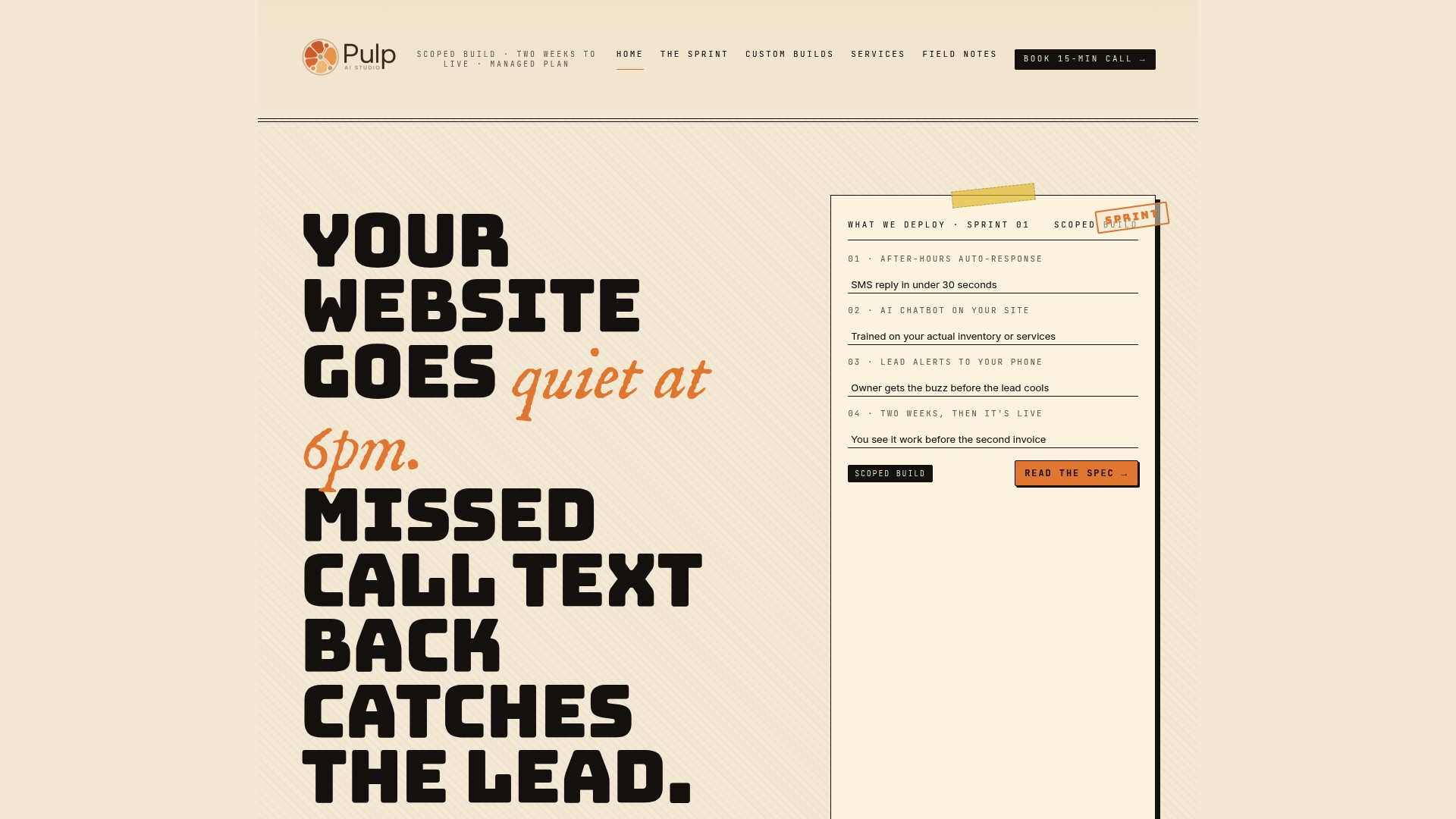
A two-week scoped build process delivers a working custom AI system and a full ownership handoff, the vendor advertises. That commitment pairs with a missed call text back and AI auto reply setup focused on lead capture for small sites.
Core Features
- Two-week scoped build process that targets a single deliverable and transfers the deployed system to the client.
- Owner owned AI system and source code so the client can modify or tune after delivery.
- Custom chatbots trained on specific inventory or services for clinics, shops, and contractors.
- Lead capture and notification logic that logs inquiries and routes leads to staff or CRM.
- After hours and 24/7 AI answering configurations to catch missed calls and texts outside business hours.
Key Differentiator
Fixed scope and single developer ownership make the engagement unusually hands on. A single developer manages discovery, build, and handoff so the final system reflects one consistent vision. That model emphasizes code ownership and direct control rather than a subscription product with ongoing vendor lock in.
Pros
-
Custom builds match a clinic workflow. The team trains the chatbot on the clinic’s services and typical intake questions so responses feel specific and useful.
-
The client receives full source code and deployment access. You do not inherit vendor lock in if you want to move hosting or tune the model.
-
The fixed scope sets a clear delivery target. The two-week claim above gives clinics a predictable timeline for replacing missed call handling.
-
One developer owns the project from start to finish. That reduces handoffs and keeps requirements tight for small operations with limited IT staff.
-
Designed for small to mid sized businesses, the solution emphasizes practical features like lead routing, appointment booking, and emergency triage.
Cons
- Public information on integrations and longer term support is limited, which may require you to clarify post delivery maintenance and third party connectors before contracting.
Who It’s For
Clinic administrators and small business owners who want a tailored, owner owned AI answering setup rather than a subscription chatbot. This suits practices that want one-off projects that capture after hours leads and deliver code ownership for future control.
Unique Value Proposition
Fixed fee per project and owner ownership mean you own what you commission. You commission a scoped build and receive the system and source code so your clinic can run or modify the solution. That model reduces recurring costs for clinics with steady but modest message volume.
Real World Use Case
Picture a small clinic after the front desk goes home: a prospective patient texts about availability at 7pm. The AI answers within seconds, captures the name, reason for the visit, and preferred time, then drops a lead alert to the owner’s phone. The next morning staff follow up with a warm, pre-qualified lead instead of a voicemail — the same after-hours leak a scoped build like this is meant to close.
Pricing
Pulp AI Studio charges a fixed fee per project based on scope. Final pricing depends on integration complexity and feature set requested.
Website: https://pulpaistudio.com
OmniHelio
At a Glance
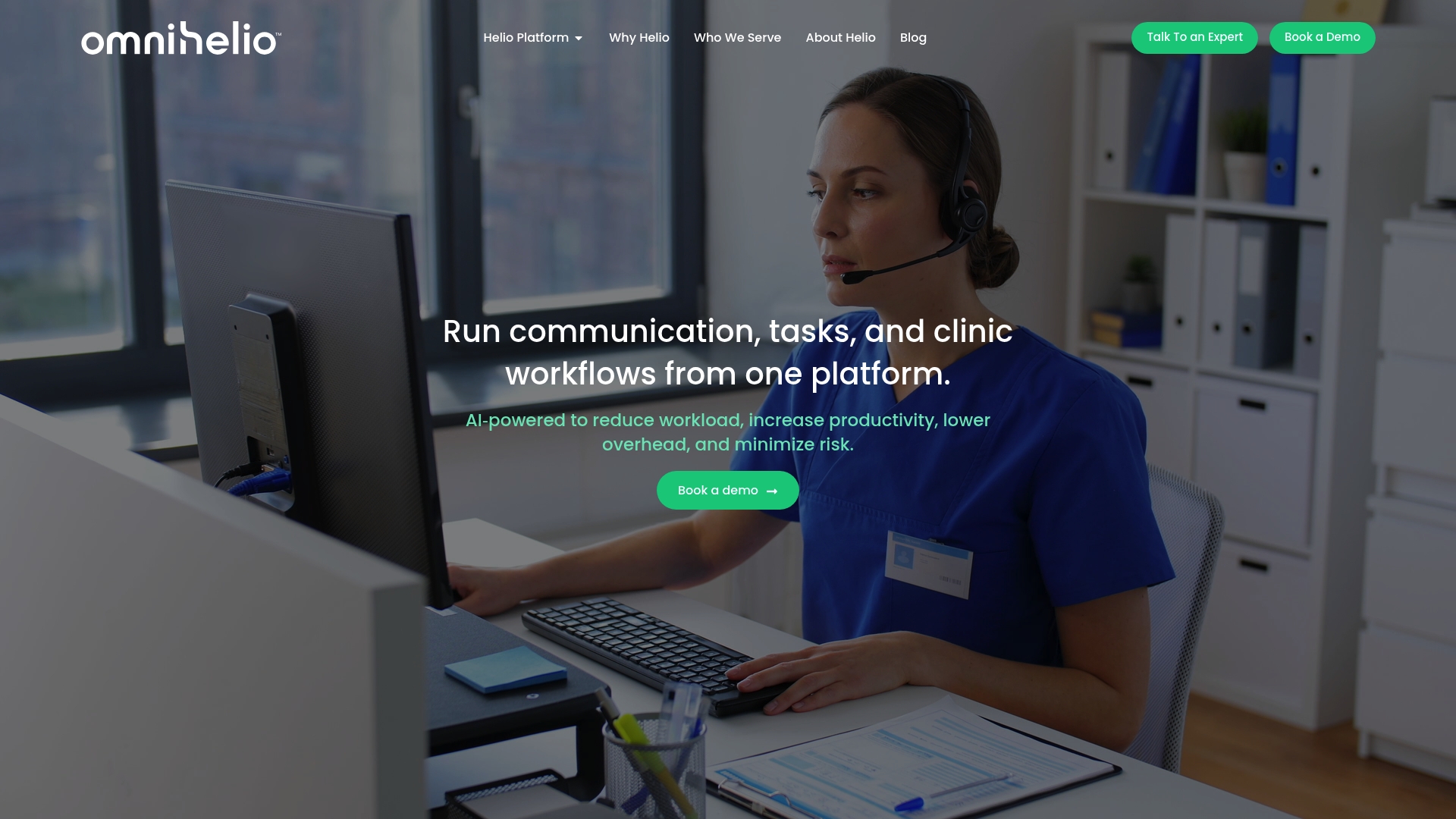
Two-way EMR integration with AthenaHealth is a core capability that powers OmniHelio’s workflow sync. The platform was developed by clinicians and concentrates on closing gaps between patient messages, clinical tasks, and EMR records. It pairs multi-channel messaging with AI task routing to reduce repetitive admin work.
Core Features
OmniHelio unifies calls, texts, emails, chat, and web messaging into a single inbox for clinic teams. It provides custom workflows and automation to route requests, assign tasks, and escalate issues across staff roles. Team collaboration tools let clinicians annotate tasks and track progress alongside reporting dashboards. The platform includes AI patient request handling and two-way EMR integration with AthenaHealth.
Key Differentiator
OmniHelio targets clinics that need deep EMR synchronization and internal task orchestration rather than only outward patient capture. Its clinic-first design and AI routing focus on matching patient requests to clinical workflows. Unlike Pulp AI Studio’s rapid missed-call text-back emphasis, OmniHelio invests in EMR sync and internal task management for clinics running AthenaHealth.
Pros
-
Designed by clinicians for clinicians. The product reflects real clinic workflows and common pain points.
-
Replaces multiple legacy tools by combining communication, tasking, and reporting in one system. That reduces context switching for staff.
-
AI automation handles routine patient requests and supports self-service. This lowers repetitive manual steps for front-desk teams.
-
HIPAA compliant with enterprise security measures. The platform lists compliance as part of its offering.
-
Robust analytics let administrators measure volumes, task completion, and team performance.
Cons
-
Reviews cite a learning curve for configuring complex workflows. Staff training is commonly required.
-
Integrations currently center on AthenaHealth, so other EMR connections may need custom work. That limits out-of-the-box fit for clinics on different EMRs.
-
Larger clinics may face a significant implementation effort when migrating many legacy channels.
When It May Not Fit
If your practice uses an EMR other than AthenaHealth and you need immediate, low-effort setup, OmniHelio may not be the right match. Clinics that prioritize a fast missed-call text-back only solution will find Pulp AI Studio geared toward rapid deployment instead. Organizations with limited training capacity should plan for a rollout period and staff onboarding.
Notable Integrations
- AthenaHealth EMR (current). The vendor indicates other EMRs are possible on request, but AthenaHealth is the built-in integration.
Who It’s For
OmniHelio fits clinics and medical practices that want a single system for patient messaging, task assignment, and EMR synchronization. It suits mid-size practices that can invest time in setup and training. Clinic leaders looking to reduce manual handoffs and centralize case notes will find the feature set relevant.
Real World Use Case
A mid-size clinic consolidated phone, text, and web inquiries into one inbox and linked those threads to AthenaHealth patient records. Staff automated appointment reminders and routed refill requests to nursing staff. The clinic reduced repeated data entry and shortened task turnaround by assigning requests directly from the unified inbox.
Pricing
Not applicable — informational only
Website: https://omnihelio.com
Puppeteer AI
At a Glance
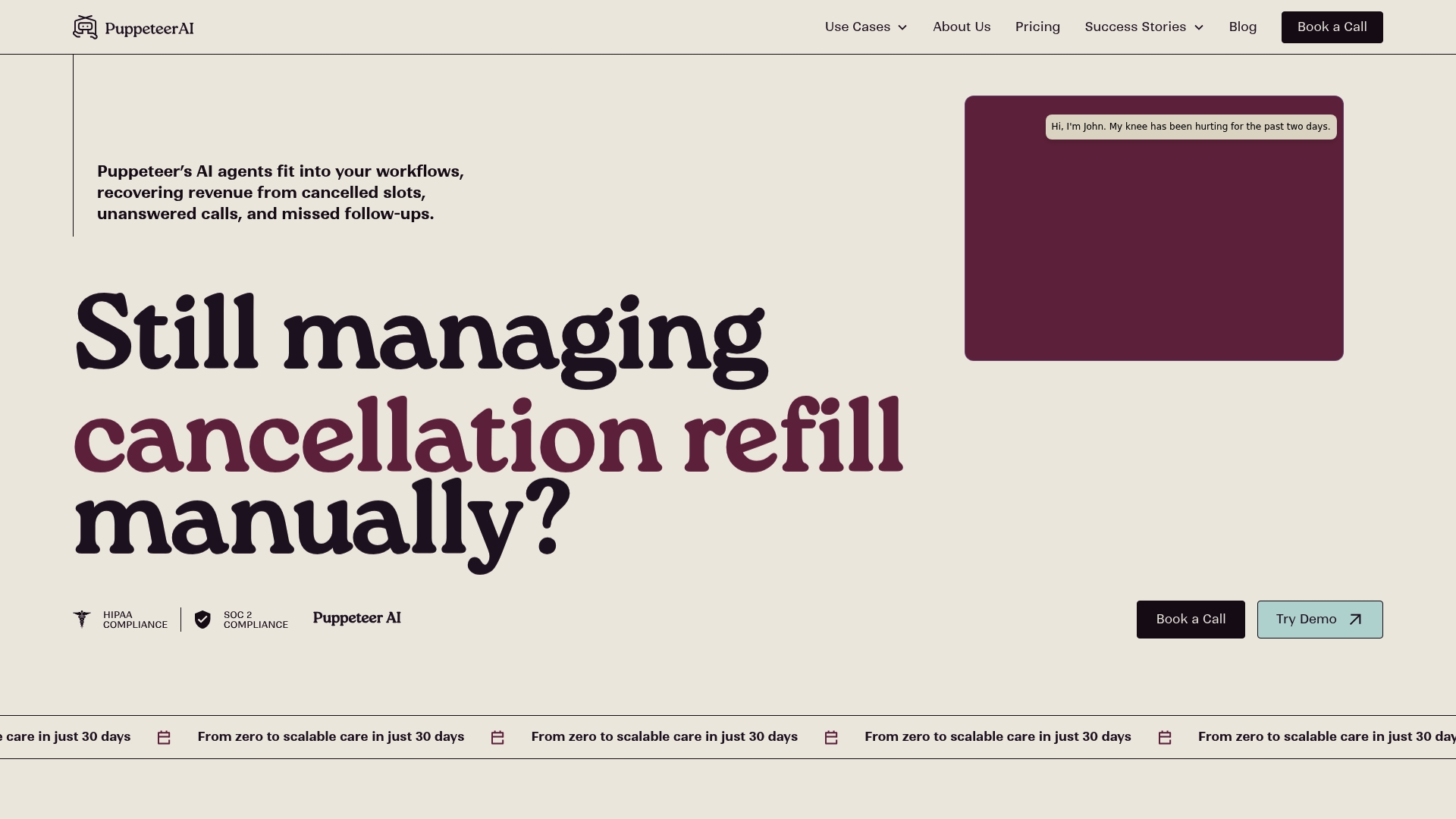
According to the company, a dental clinic saw a 20% drop in no shows after using Puppeteer AI for appointment reminders. That vendor report shows how the product can reduce manual outreach and recover lost visits. Puppeteer AI focuses on clinical conversation flows and data capture to make follow up and intake simpler for busy front desks.
Core Features
-
Customizable AI agents configured to match clinic workflows and communication tone. These agents handle intake, triage, scheduling, and follow up with scripted clinical pathways.
-
Secure API integrations with EHRs and CRM systems for read and write actions within patient records.
-
The vendor advertises HIPAA and GDPR compliance along with other data security measures, which matters for regulated clinical data.
-
Real time dashboards that show interaction volume, unresolved conversations, and outcome tags for each patient encounter.
-
Voice and text automation available around the clock with guardrails for safety and clinical escalation rules.
Key Differentiator
Puppeteer AI centers on healthcare first. Its agents are built around clinical protocols and EHR connectivity rather than generic chat templates. That focus lets clinics route triage results into charts and enforce consent and safety checks inside workflows. For clinics that need deep EHR hooks and clinical grounding, this product deliberately fits that niche.
Pros
-
Highly customizable to match specific clinic scripts and intake forms. You can tune prompts to collect the exact fields your staff needs.
-
Strong emphasis on security and privacy controls. The vendor states regulatory alignment with major privacy frameworks.
-
Broad clinical use case coverage from intake to patient reactivation. One system can cover reminders, triage, and answer routine medical questions.
-
Direct integrations with mainstream EHR vendors. That reduces manual charting when the agent updates appointments or messages.
-
Real time monitoring gives administrators visibility into unanswered questions and agent performance.
Cons
-
No detailed pricing breakdown is public. The vendor lists starting pricing but custom setups may raise total cost.
-
The product has limited explicit mention of multilingual options. Clinics serving many languages may need to confirm language support.
-
Some legacy or highly customized EHRs may require engineering work to connect. That technical effort can add time to deployment.
When It May Not Fit
Smaller clinics with minimal IT resources may find the setup cost and integration work prohibitive. Practices that need quick, out of the box text responses without EHR writing are better served by lighter tools. If budget constraints are tight, the pricing model may rule this out for very small practices.
Notable Integrations
- Epic
- Cerner
- athenahealth
- eClinicalWorks
- Medplum
- Healthie
- Dr Chrono
- Canvas
Who It’s For
Healthcare practices and hospitals that need compliant, customizable conversational agents integrated into clinical systems. Larger clinics and health systems that require EHR writes and clinical protocol enforcement get the most value. Smaller solo practices should evaluate setup cost and integration needs before committing.
Real World Use Case
According to the company, a dental clinic used Puppeteer AI to automate appointment reminders and intake. That report cited a 20% reduction in missed visits and richer intake data, which freed front desk time for care coordination. The example shows how automation can shift staff effort from calls to exceptions handling.
Pricing
Pricing starts from $1,350/month for standard plans, with enterprise options available on request. Custom integrations and higher message volume are typically quoted as part of an enterprise agreement.
Website: https://puppeteerai.com
Curogram
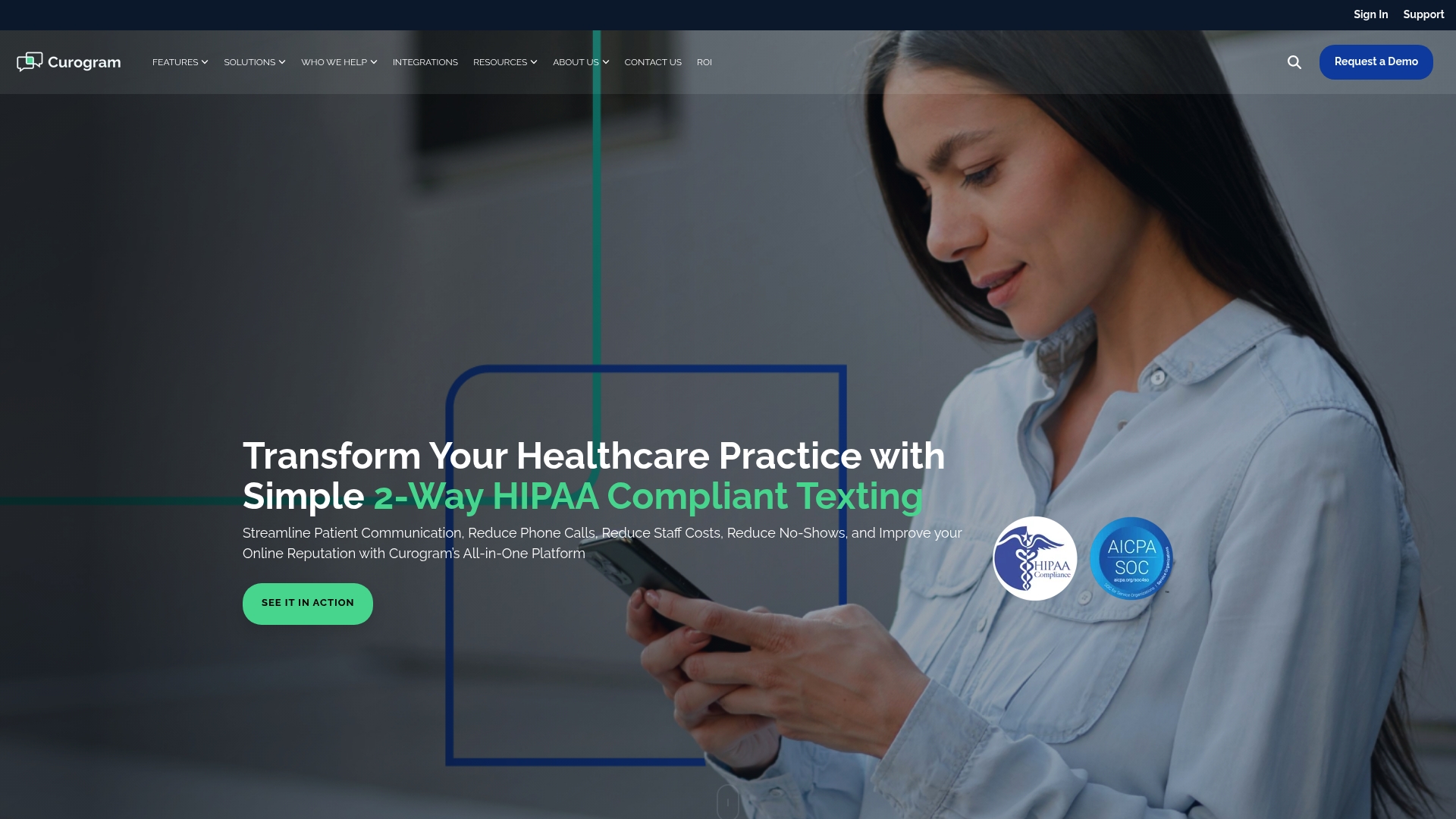
At a Glance
According to the company, Curogram reports strong review presence on G2 and high customer satisfaction scores. The platform pairs HIPAA compliant messaging with online forms and telemedicine to centralize patient contact. It emphasizes faster staff adoption and EMR connectivity for practices that manage many patients across locations.
Core Features
- 2 Way HIPAA compliant texting for inbound and outbound patient messages.
- Patient reminders with automated appointment and recall texts.
- Reputation management and marketing tools for review collection and outreach.
- Secure online patient forms and online lead capture.
- Mass messaging, text to pay requests, missed call or voicemail to text, and telemedicine support.
Key Differentiator
Curogram focuses on deep EMR connections and workplace usability. Its stated strength is that the platform integrates directly with most major EMRs while keeping staff training short. If you compare it to Pulp AI Studio, Curogram aims at larger, multi location groups that need native EMR workflows rather than rapid missed call text back setups for small operators.
Pros
- High usability: Staff learn the interface quickly. That reduces training time for front desk teams.
- Strong vendor support: The company advertises high satisfaction on review sites and verified testimonials. That claim aligns with reports of responsive onboarding and help.
- Seamless EMR integration: Connects with most major EMRs and practice management systems. This keeps patient records and messages in one place.
- Reduces no shows and workload: Automated reminders and confirmations cut manual call volume. Clinics report fewer scheduling gaps when workflows are configured.
Cons
- Pricing is not publicly listed and requires contacting sales for a quote. That adds an extra step for budget planning.
- The platform claims broad EMR compatibility, but buyer sites should verify integration with uncommon or custom systems. Compatibility is not guaranteed for every setup.
- Smaller single site practices may find the platform costly compared with lighter tools. Module choices can drive up the final price.
When It May Not Fit
If you run a single small clinic on a tight budget, Curogram may be heavier than you need. Practices that lack a supported EMR or use a bespoke system should confirm integration before committing. If you want a rapid turnkey missed call text back with minimal configuration, Pulp AI Studio-like offerings will likely be faster to deploy.
Notable Integrations
Most major EMRs and practice management systems. Buyers should request a compatibility list during the sales conversation to confirm the specific vendor and version.
Who It’s For
Large group practices and multi location clinics that need HIPAA compliant messaging tied directly into scheduling and patient records. Practices that value short staff training and verified vendor support will benefit. Clinics planning to centralize telemedicine, forms, and messaging into one workflow will find this a closer match.
Real World Use Case
A multi location medical group used Curogram to automate appointment reminders and to convert missed calls into text threads. The EMR connections logged confirmations back into patient charts. That setup reduced front desk callbacks and simplified follow up across locations.
Pricing
Pricing is not specified on the public site. The vendor typically provides a customized quote after direct engagement with sales and a review of required modules and EMR connections.
Website: https://curogram.com
Mihu AI Healthcare
At a Glance
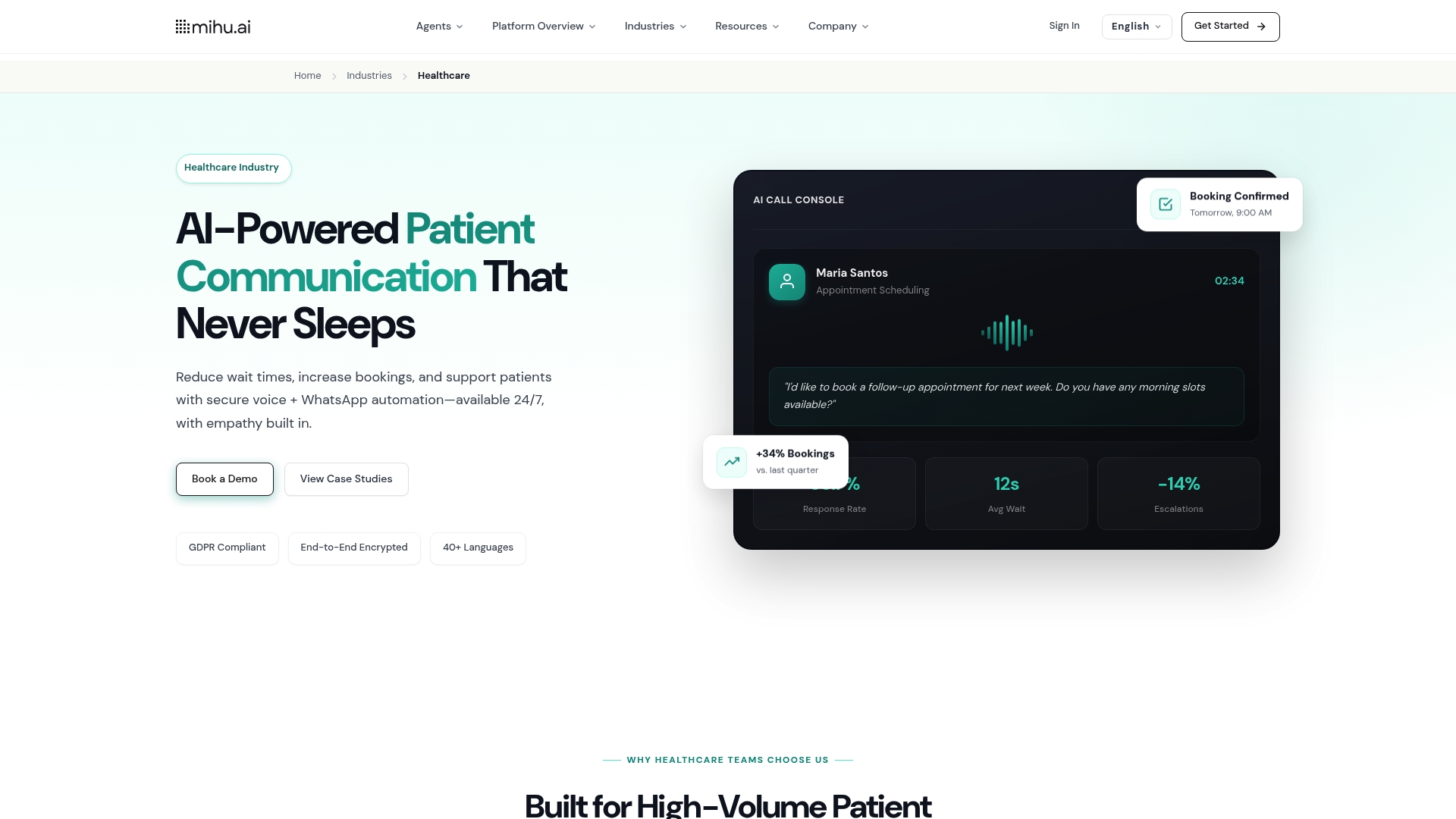
The vendor reports that its virtual agents auto resolve 80% of interactions and states response times under 0.7 seconds. Those two performance claims target high volume clinics that need continuous patient handling. The platform supports voice, WhatsApp, and social channels while keeping data under GDPR and HIPAA controls.
Core Features
-
Multi channel patient contact across voice calls, WhatsApp, and social messaging. This lets clinics meet patients on the channels they already use.
-
Automated appointment scheduling, reminders, and rescheduling workflows. The system handles common booking tasks without human intervention.
-
Clinical postoperative checkins with symptom tracking and escalation rules. That feature is built for follow up and early issue detection.
-
Patient intake, eligibility screening for trials and procedures, and multilingual support. The platform handles form capture and routing in several languages.
-
Secure operations with end to end encryption and compliance controls. The vendor advertises GDPR and HIPAA alignment for protected health information.
Key Differentiator
Mihu AI Healthcare centers on healthcare specific workflows rather than generic auto reply. Its cross channel, multilingual agents combine intake, postoperative monitoring, and eligibility screening into a single flow. Compared with Pulp AI Studio, which focuses on rapid deployments for small operators, Mihu targets larger providers that need built in clinical protocols and heavy volume handling.
Pros
-
High automation rate reduces front desk load and repetitive calls. The figure above suggests most routine scheduling and simple queries leave staff more time for complex tasks.
-
Fast response times and 24/7 availability support continuous patient contact. That responsiveness helps limit missed bookings outside business hours.
-
Built in clinical workflows for postoperative checks and escalation. Clinics get symptom tracking and an auditable path to route patients to clinicians.
-
Multilingual support and broad channel coverage improve access for diverse patient populations. This reduces call transfers and language barriers.
-
Security and compliance features suitable for handling protected health information. The product includes controls that align with common healthcare requirements.
Cons
-
On premise and complex integrations may require substantial IT involvement. Smaller clinics without dedicated IT staff could struggle with setup.
-
Customization and workflow tuning can be time consuming. Achieving reliable clinical escalation rules will take testing and clinical oversight.
-
Pricing transparency is limited, which can hide additional costs for enterprise connectors or heavy customization. Budgeting requires direct vendor discussions.
When It May Not Fit
If your clinic is a very small practice with minimal technical resources, this product may be more than you need. Organizations that need a plug and play text back system with a two week setup are likely better served by a provider built for rapid, low touch deployment. Also, clinics unwilling to invest in integration work may find implementation slow.
Notable Integrations
-
CRM systems including Salesforce, HubSpot, and Zoho. These help sync patient records and follow up tasks.
-
VoIP and telephony infrastructure to route voice interactions into the platform.
-
Calendar and appointment scheduling tools for two way booking and conflict checks.
-
Existing healthcare management systems to pass clinical and administrative data between systems.
Who It’s For
Mihu AI Healthcare fits large healthcare organizations and regional clinic groups that handle high call volume and need clinical workflows embedded in automation. IT teams and clinical operations staff that can manage integrations will get the most value. Smaller clinics should evaluate integration effort before committing.
Real World Use Case
A regional clinic used Mihu to automate most appointment bookings, follow ups, and routine patient support, which lowered administrative queue lengths and freed nurses for more complex tasks. The clinic reported faster contact rates outside office hours after shifting routine flows to the AI agents.
Pricing
Pricing is not explicitly provided and appears custom based on deployment and feature needs. Expect quotes to vary with channel volume, integration scope, and clinical workflow customization. Contact the vendor for a tailored estimate.
Website: https://mihu.ai/healthcare
Kura
At a Glance
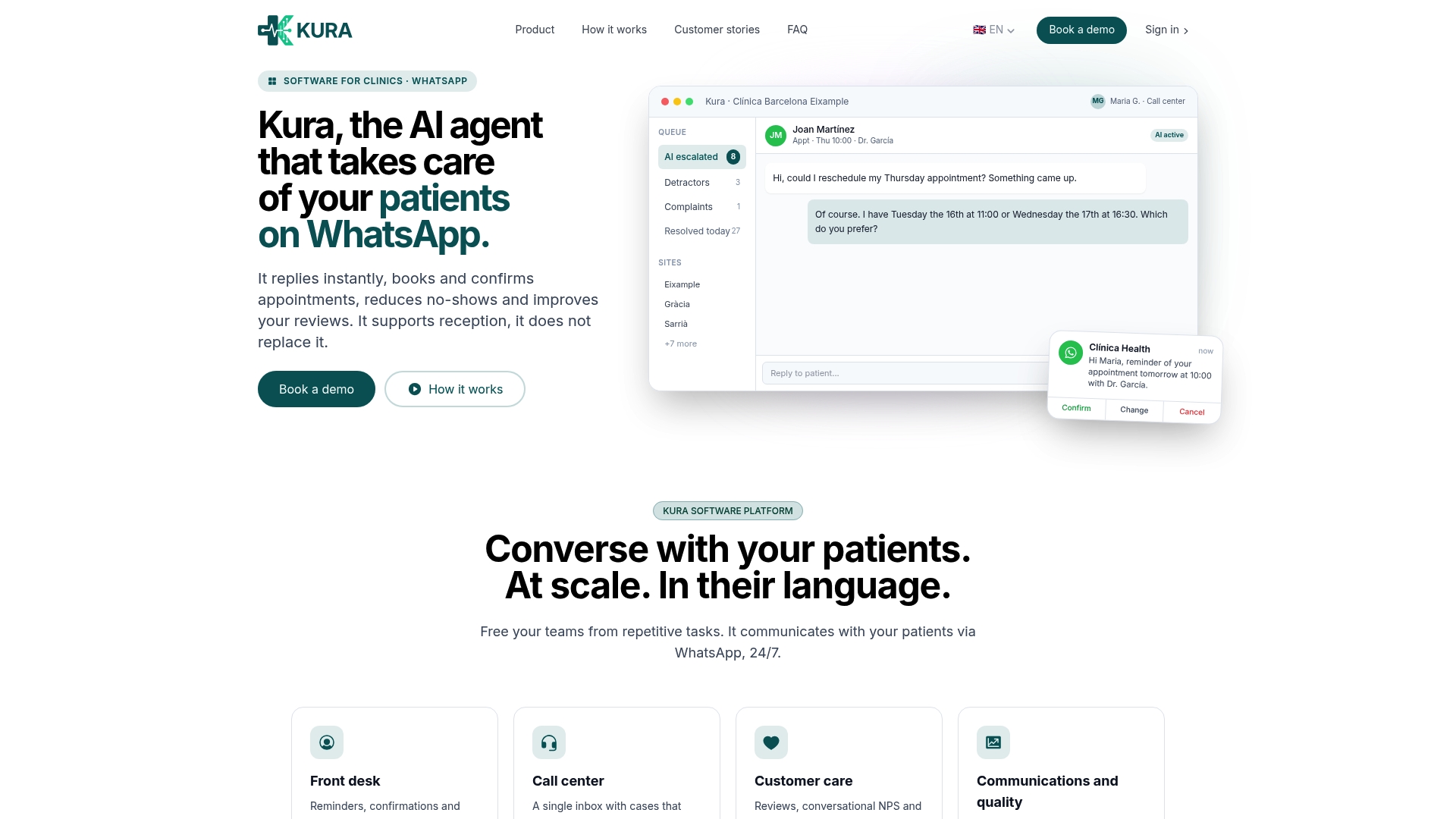
Automates multilingual patient conversations over WhatsApp while routing complex threads to human staff. The vendor advertises GDPR compliance for data handling. Kura targets small clinics and multi-site practices and aims to remove repetitive messaging so staff can focus on clinical tasks.
Core Features
-
Automates patient messaging on WhatsApp for booking, rescheduling, and confirmations with predefined workflows that map to clinic schedules.
-
Handles multilingual interactions in real time so teams can support patients in different languages without hiring extra staff.
-
Escalates complex or clinical queries to a human team member and logs the handoff for audit and follow up.
-
Integrates with existing practice management systems and patient record systems so you do not replace current software.
-
Provides reporting and analytics to track appointment outcomes, reminders sent, and conversation volumes.
Key Differentiator
Kura focuses on automating routine patient communication exclusively over WhatsApp while integrating with a clinic’s current systems. That narrow scope makes it a practical choice for practices that need a lightweight automation layer tied to their scheduling and records. It does not attempt to replace practice management software.
Pros
-
Reduces routine messaging workload and response time, freeing front desk staff for phone calls and in-person intake.
-
Improves patient engagement by supporting multiple specialties and languages, which helps clinics with diverse patient populations.
-
Works across multiple sites, so small networks can deploy a single automation instance for many clinics.
-
GDPR compliance is part of the product messaging, which matters for clinics operating in jurisdictions with strict data rules.
Cons
-
Tied to WhatsApp and requires a reliable internet connection, so outages or platform restrictions stop automated messages.
-
Setup and integration may need technical support, which means some initial IT time and possible consulting costs.
-
The platform is limited to the WhatsApp channel by default, so clinics wanting email or SMS first need additional tools.
When It May Not Fit
If your clinic needs native multi-channel outreach across email, SMS, and voice, Kura’s WhatsApp focus may be too narrow. Clinics without stable internet or without a WhatsApp Business account will face disruptions. Large hospital systems that require deep, custom integrations may find the technical setup insufficient.
Notable Integrations
-
WhatsApp Business API for message delivery and session management.
-
Practice management software via API or native connectors to sync appointments and availability.
-
Patient record systems for logging conversations and updates.
Who It’s For
Clinics and small healthcare practices that want to automate booking, reminders, and follow up without replacing their practice management software. Best for multi-site operators and practices serving multilingual patient bases who accept WhatsApp as a primary patient channel.
Real World Use Case
According to the company, a regional dental network used Kura to automate reminders, handle ad-driven lead inquiries, and rebook canceled slots. The vendor reports a 35% reduction in no-shows for that network, which shortened staff follow up and sped new patient onboarding.
Pricing
Pricing details are not listed in the product data. Contact Kura for tiered plans, onboarding fees, and information about connector or integration costs.
Website: https://getkura.ai/en
Comparison of alternatives
AI auto-reply systems enable clinics to enhance communication while optimizing administrative efficiency. In this comparison, we examine key providers in this category, spotlighting their unique strengths and tradeoffs.
Time to implementation
Pulp AI Studio prioritizes a two-week scoped build process, ensuring a rapid deployment of a custom AI messaging system tailored to clinic workflows. This approach contributes to its appeal for organizations needing quick, effective setups. Conversely, OmniHelio, while deeply integrated with AthenaHealth, may involve more extensive configuration and staff training. Additionally, Mihu AI Healthcare caters to high-volume clinics, but its feature set might necessitate a longer adjustment phase.
Data integration and connectivity
When considering integration capabilities, OmniHelio stands out with its synchronization with AthenaHealth EMR, which enhances workflow automation and reduces redundant tasks. Curogram also offers integration with many EMR systems, providing a centralized communication hub. However, Pulp AI Studio offers self-hosted control post-deployment, granting clients flexibility in managing their AI systems independently of vendor constraints.
Best fit
- Pulp AI Studio is recommended for clinics seeking ownership and autonomy in a custom-built solution developed on a rapid timeline.
- OmniHelio will suit practices reliant on AthenaHealth needing extensive integration to minimize manual operations.
- Kura offers simplicity for clinics focusing on multilingual outreach within WhatsApp’s ecosystem.
Our pick
For clinics prioritizing ownership, customizability, and streamlined deployment, Pulp AI Studio emerges as the ideal option. It provides a rapid project lifecycle. However, clinics requiring deeper EMR connectivity or broad outreach may find OmniHelio or Kura better aligned with their operational goals.
For clinics seeking effective AI solutions tailored to improve patient communication and lead management, the following summary table provides a comparison of notable products and their key features:
| Product | Key Differentiator | Best For | Pricing | Limitation |
|---|---|---|---|---|
| Pulp AI Studio | Fixed scope with code ownership | Clinics needing quick deployment and future system customization | Not disclosed | Limited post-delivery integration details available |
| OmniHelio | Two-way EMR integration with AthenaHealth | Clinics requiring workflow integration with AthenaHealth EMRs | Not applicable | Learning curve for configuring complex workflows |
| Puppeteer AI | Healthcare-first customizable AI agents with EHR connectivity | Larger clinics needing robust EHR integration | $1,350/month upward | Limited information on multilingual support |
| Curogram | High usability with strong vendor support | Multi-location practices needing HIPAA-compliant messaging | Not disclosed | Integration requires confirmation for custom EMRs |
| Mihu AI Healthcare | Cross-channel multilingual workflow automation | Large hospitals needing tailored, scalable automation | Not disclosed | High setup and customization requirements |
This concise table compares products and emphasizes their distinct advantages to guide you in selecting the optimal platform for your clinic.
Unlock Reliable Patient Engagement with Pulp AI Studio
The article highlights a core challenge clinics face: missing leads during off-hours and the struggle to capture every patient inquiry efficiently. This gap often results in lost opportunities and increased staff workload managing callbacks and appointment scheduling. Clinics need AI auto-reply tools that are quick to deploy, easy to own, and tailored to their workflow without locking them into ongoing subscriptions.
Pulp AI Studio directly solves these pain points with its two-week scoped build process delivering a fully functioning missed-call text-back and AI auto reply system. Small clinics gain full ownership of their AI setup, enabling staff to capture leads and schedule appointments even after hours. Pulp AI Studio’s approach cuts down ghosted missed calls and lets clinics regain control.
If you want to stop losing patient leads and reclaim front desk productivity, explore how Pulp AI Studio can plug in rapidly to your clinic’s communication workflow. Learn more at Pulp AI Studio. Take control of your after-hours patient connection and convert missed calls into real appointments today.
FAQ
What unique feature does Pulp AI Studio offer for clinics?
Pulp AI Studio provides a two-week scoped build process, allowing clinics to have a custom AI system rapidly deployed. The company emphasizes that clients receive full ownership of the AI system and source code, enabling future modifications or tuning after delivery.
How does Pulp AI Studio compare to OmniHelio in terms of use case?
OmniHelio excels at deep EMR synchronization and internal task orchestration, making it suitable for clinics that prioritize extensive integration with EMR systems. In contrast, Pulp AI Studio is designed for clinics seeking a straightforward, owner-owned AI answering solution, making it a better fit for those wanting a one-off project.
Can Pulp AI Studio handle lead capture and notifications effectively?
Yes, Pulp AI Studio includes lead capture and notification logic that logs inquiries and routes leads to staff or a CRM, enhancing workflow and response time. This makes it particularly useful for small businesses that need to manage after-hours inquiries and improve lead tracking.
Are there any limitations to Pulp AI Studio regarding integrations?
Pulp AI Studio has limited public information about integrations and long-term support, which may necessitate additional clarification about post-delivery maintenance and third-party connectors before contracting.
What is the pricing structure for Pulp AI Studio?
Pulp AI Studio charges a fixed fee per project based on scope. This pricing model provides clarity and predictability for clinics budgeting for AI implementation.