
 Adam Pichardo
Most administrators assume AI is a luxury for big hospital systems with deep IT budgets. That assumption is now costing smaller practices real money and real patients. Understanding why medical practices need AI tools means looking at what is actually happening on the ground: physicians burning out under documentation loads, patients calling after hours and getting voicemail, and referrals going cold because nobody followed up fast enough. AI technology for patient care and clinic operations is no longer experimental. It is deployed, proven, and increasingly expected by the patients walking through your door. When those after-hours calls are the gap, a purpose-built medical after-hours answering service closes it.
Key takeaways
| Point | Details |
|---|---|
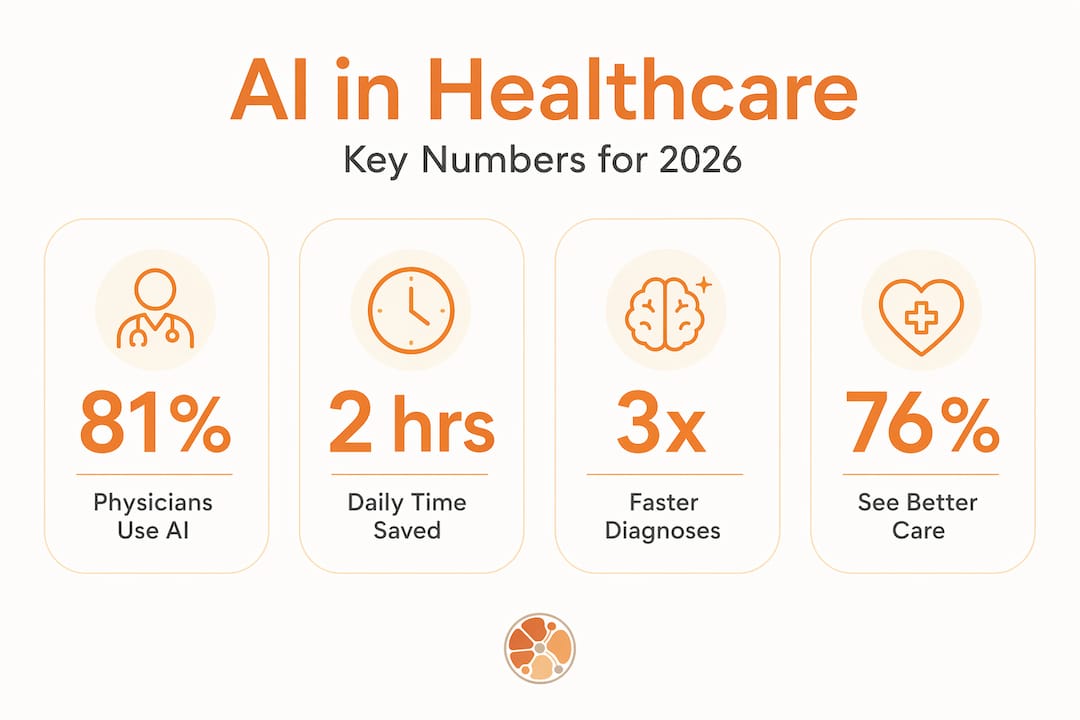
| Adoption is already mainstream | 81% of physicians now use AI professionally, so waiting is a competitive risk, not a safe choice. |
| Documentation time drops dramatically | AI scribes cut documentation time by 50 to 70%, giving providers back one to two hours every single day. |
| Clinical outcomes improve measurably | AI monitoring tools have shown a 17% mortality reduction in high-risk settings, with diagnostic accuracy gains across specialties. |
| Human oversight is non-negotiable | AI works best as a co-pilot, not autopilot. Manual review catches errors and keeps liability in check. |
| Patient communication is the fastest win | Automating after-hours messages and missed call responses captures leads before patients call the next clinic on their list. |
Why medical practices need AI tools right now
The numbers are hard to argue with. As of 2026, over 80% of physicians report using AI tools in a professional capacity, more than double the adoption rate recorded in 2023. This is not a slow-moving trend. It is a rapid shift happening inside everyday practices, from solo family medicine offices to mid-size specialty groups.
What are physicians actually doing with AI? The most common applications break down this way:
- Documentation assistance: AI scribes listen to patient encounters and generate clinical notes automatically.
- Research summarization: AI tools condense lengthy clinical studies into relevant takeaways physicians can act on quickly.
- Diagnostic support: Pattern recognition tools flag abnormalities in imaging, labs, and patient history that a fatigued clinician might miss at the end of a long shift.
- Patient communication: Automated messaging handles appointment reminders, follow-up instructions, and after-hours inquiries.
Physician attitudes are cautiously optimistic. More than 76% believe AI improves both efficiency and patient care, though they are clear about needing liability frameworks and safety validation before trusting any tool completely. That is a reasonable position. The importance of AI tools for clinics is not about blind adoption. It is about responsible integration where physicians stay involved in evaluating and refining the technology.
Documentation and workflow: where AI saves the most time
Here is a practical number: physicians spend, on average, nearly two hours on administrative and documentation tasks for every hour of direct patient care. AI scribes attack that ratio directly. Reducing documentation time by 50 to 70% translates to one to two hours reclaimed per provider, per day. Over a year, that is weeks of clinical capacity returned.

But the benefit goes deeper than time. Physicians describe the cognitive experience of AI assistance as fundamentally different from just “going faster.” AI reduces mental fragmentation by organizing clinical information into living synopses, so providers are not mentally juggling fifteen half-formed notes while trying to hold a conversation with a patient. Think of it as clearing a cluttered desk mid-shift. You can actually think again.
Successful workflow integration typically follows this sequence:
- Audit your current documentation load. Count the actual minutes spent per note, per day. You need a baseline before you can measure improvement.
- Select AI tools matched to your specialty. A dermatology practice has different documentation needs than a cardiology group. Generic scribes may miss specialty-specific terminology.
- Redesign workflows before deploying the tool. Dropping AI into a broken process amplifies the problem. Fix the process first, then automate it.
- Train every provider, not just the tech-comfortable ones. Adoption gaps create inconsistency, which creates liability.
- Build in mandatory review steps. AI-generated notes require provider verification before signing. This is not optional.
Pro Tip: Set a two-week trial period for any new AI scribe tool, tracking both time saved and error rate. If errors exceed one per ten notes, the tool needs recalibration or replacement before full deployment.
“The real payoff is not just the minutes saved. It is the mental energy you get back to actually be present with the patient in the room.” — from a published oncology AI case account
Clinical benefits: diagnosis, engagement, and decision support
How AI transforms medical practices most visibly is on the clinical side. The results in high-acuity environments are striking. AI-driven sepsis monitoring deployed in ICUs produced a 17% reduction in in-hospital mortality. That is not a marginal improvement. In a 200-bed unit, that number represents dozens of lives annually.
For outpatient and primary care settings, the wins look different but are equally real:
- Earlier, more accurate diagnoses: AI pattern recognition catches early-stage conditions in imaging and labs that might not trigger a manual second look until symptoms worsen.
- Personalized care plans: AI tools synthesize patient history, genetics, and population data to surface treatment options tailored to the individual rather than the average.
- Better patient understanding: Visual output from AI diagnostics helps patients see and understand their disease burden, which directly improves treatment adherence. A patient who can see their arterial plaque on a clear graphic is more likely to take their statin than one who hears a number spoken aloud.
- Chatbot-assisted follow-up: AI messaging tools answer common post-visit questions, reducing unnecessary callback volume and freeing your staff for complex cases.
“Patients who better understand their condition visually are significantly more likely to follow through on treatment plans.” — Medical Economics, 2026
The benefits of AI in healthcare compound when clinical and communication tools work together. A patient gets an AI-assisted diagnosis, receives a clear visual explanation, and then gets an automated follow-up message checking in three days later. That is AI technology for patient care working as an integrated system rather than a collection of disconnected features.
Challenges worth knowing before you start
No article worth your time skips the downsides. Here is an honest comparison of what you are trading when you adopt AI tools:
| What you gain | What you have to manage |
|---|---|
| Documentation time back | Ongoing provider review of AI-generated notes |
| Earlier diagnostic signals | Validation that the AI tool has clinical evidence behind it |
| After-hours patient coverage | Data privacy compliance and security protocols |
| Reduced staff call volume | Initial integration work with your existing EHR system |
| Competitive retention advantage | Training investment for all clinical staff |
The liability question is real. Physicians demand clear frameworks before trusting AI with consequential decisions, and they are right to. If an AI scribe generates an inaccurate medication entry and a provider signs without reviewing it, the liability sits with the provider. That is why human-in-the-loop review is not a nice-to-have. It is a structural requirement of safe AI deployment.
“Black box” tools are another risk. If an AI diagnostic tool cannot explain why it flagged a result, your clinicians cannot evaluate whether to act on it. Demand explainability as a baseline feature when evaluating any AI diagnostic product.
Pro Tip: Before purchasing any AI diagnostic tool, ask the vendor for peer-reviewed clinical validation data specific to your patient population. Generic efficacy data from a different demographic may not transfer to your practice.
Reimbursement readiness also matters. AI diagnostics require coverage alignment with payer contracts before they can drive revenue rather than just cost savings. Confirm your payer mix supports billing for AI-assisted services before building workflows around them.
How to implement AI tools effectively in your practice
Getting this right is mostly about sequencing. Practices that deploy AI thoughtfully, with clinician input and strong EHR interoperability at the center, see the best outcomes. Practices that buy a tool and expect it to sort itself out see frustration, low adoption, and wasted spend.
Here is a practical framework to get you started:
- Map your pain points first. Is the problem documentation overload, missed after-hours calls, slow diagnostic turnaround, or patient no-shows? The answer determines which AI tool category you need, not what a vendor demo shows you.
- Check EHR compatibility before signing anything. A disconnected AI tool that does not talk to your existing records system creates more work than it removes. Interoperability is a prerequisite, not a bonus feature.
- Involve your front-line staff in evaluation. The nurses and medical assistants who will use the tool daily will catch usability problems that a C-suite demo will miss entirely.
- Set measurable goals with a 90-day checkpoint. Define what success looks like in numbers: minutes saved per note, calls handled after hours, reduction in patient no-shows. Review at 90 days and adjust.
- Keep a human review step permanently in place. Automation handles volume. Humans handle judgment. That division of labor is what makes AI adoption sustainable over the long term.
One overlooked detail: practices that skip staff involvement in AI selection often face a quiet rebellion at the implementation stage. Nobody uses the tool, data quality suffers, and the administrator is left explaining why the investment did not pay off. Include your people from day one.
Pro Tip: Run a structured pilot with two or three volunteer providers before rolling out any AI tool practice-wide. Their feedback shapes a much better implementation than any vendor playbook will.
My take on AI in medical practices
I have worked with practices that treat AI as a silver bullet and practices that treat it like a liability they are forced to consider. Neither approach works well. Here is what I have actually observed.
The practices getting the most out of AI are the ones that framed it correctly from the start. They told their staff: “This is a cognitive assistant, not a replacement.” That framing matters more than the technology itself. When providers feel like AI is there to handle the mental overhead, not to take their job, adoption happens naturally.
What I have learned about the limits is equally important. I have seen practices rush a scribe tool into use without review protocols, then spend months untangling documentation errors that created billing problems downstream. The tool was not the issue. The workflow around it was. AI is only as good as the human judgment wrapped around it.
The AI-is-essential-in-medicine debate often gets framed as a question about capability. Can AI diagnose as well as a physician? Sometimes, in narrow domains, yes. But that is the wrong question. The right question is: where is your team losing the most cognitive energy, and can AI absorb that load without introducing new risk? Start there, and the technology becomes a genuine asset.
— Adam
A Plan Run for You, Not Another Tool to Run
Most owners did not lose the lead because a tool was missing. They lost it because nobody had time to run the tool. So we run it for you: a hosted CRM with the AI already wired in, set up and managed for your shop, live in about two weeks, and priced in the same range as the do-it-yourself AI receptionist plans, at one flat monthly price. The pieces most shops start with:
- Voice AI receptionist. Answers, qualifies, and books onto your calendar day or night, connected to the CRM or field software you already use, and hands the call to a person when it needs one. See the after-hours answering service.
- Speed to lead. A new form fill, ad lead, or missed call gets a text back right away, while the customer is still shopping. More on why the first few minutes decide the job.
- Database reactivation. The old leads and past customers already sitting in your system get a conversational text campaign that books the ones who are ready now. Related: why leads go quiet and how to restart them.
- AI social replies. Facebook and Instagram comments and DMs get answered and routed instead of sitting unread until Monday. The AI chatbot guide covers how those replies work.
Your contacts, your conversation history, and your phone number stay yours to export or port out if you leave. For shops that want the whole system on hardware they own, prompts, logs, and models included, the custom build below is the step up (about 30 days, since there is hardware to set up). Most shops start managed and grow into a rig, not the other way around.
How Pulp AI Studio helps clinics respond faster
If documentation is your internal bottleneck, patient communication is often where revenue leaks out after hours. A patient calls at 6:45 PM, gets voicemail, and books with the next clinic on their list by 8:00 AM the next morning. Pulp AI Studio was built specifically to close that gap.
The missed call text-back system responds to every missed call within 30 seconds, automatically, day or night. On the managed setup it is HIPAA-compliant with a signed BAA, encrypted in transit and at rest, and live in about two weeks (compliance work can add a little time). Practices that want patient data on hardware they control can step up to a custom build, about 30 days, and own the rig. For practices that want extended coverage, the after-hours AI answering service handles patient triage and routing around the clock at one flat monthly price. You can also explore automating urgent patient texts to see exactly how that workflow operates inside a clinical setting. The patients you miss tonight are the appointments someone else fills tomorrow.
FAQ
What percentage of physicians currently use AI tools?
As of 2026, 81% of physicians report using AI tools professionally, more than doubling from approximately 40% in 2023.
How much time can AI scribes save per provider daily?
AI-powered scribe tools reduce documentation time by 50 to 70%, which translates to one to two hours saved per provider each day.
Is AI safe to use in clinical settings without physician review?
No. Human-in-the-loop oversight is required to catch errors, address bias, and maintain safety. AI-generated notes and diagnostic outputs should always be reviewed by a qualified clinician before acting on them.
What is the biggest operational risk of adopting AI tools too quickly?
Documentation errors are the most common risk. Overreliance on AI-generated notes without provider verification can create billing inaccuracies and liability exposure.
How do AI tools improve patient engagement specifically?
AI tools improve patient engagement by providing visual diagnostic outputs that help patients understand their condition, and by automating follow-up communication that keeps patients connected to their care plan between visits.