
 Adam Pichardo
Three conversations from the last few months, compressed. An HVAC owner who had been paying a live answering service for years wanted to know if "the robot" could do the overnight shift. A two-attorney firm wanted to stop sending intake calls to voicemail at lunch. A med spa manager wanted the phone to stop ringing while she was checking out a client who had just spent an hour in the chair.
All three asked the same question, phrased the same way: AI voice agent or answering service? And all three expected a one-word answer. There is not one. The right answer depends on what the call is, who is calling, and what has to happen in the thirty seconds after they hang up.
So this note compares notes across the three industries I get asked about most. Where an AI voice agent clearly wins, where a human answering service clearly wins, and where the honest answer is "both, in a specific order." I build AI voice systems for a living, so weigh my bias accordingly. I have tried to be fair to the human option, because in a few situations it is the better call, and I will say which ones.
Key Takeaways
The short version, before the detail.
| Point | Details |
|---|---|
| They solve the same problem differently | A human answering service rents you trained people working a script. An AI voice agent is software that answers, follows rules, and writes the result into your systems. |
| AI wins on volume, speed, and structure | Every call answered on the first ring, no matter how many arrive at once, with the same intake questions asked every time and the data landing in your calendar or CRM. |
| Humans win on judgment and emotion | A distressed caller, an unusual situation, or a call that needs real empathy is still better handled by a trained person. |
| The vertical changes the rules | HVAC is about triage and dispatch. Law firms are about intake quality and confidentiality. Med spas are about booking between treatments and keeping clinical questions away from anyone who is not a clinician. |
| Callers want a way out | Surveys of both consumers and legal clients show the same thing: people tolerate automation when they know they can reach a human. |
| Hybrid is usually the answer | AI answers first and handles the routine; a person handles the exceptions. The design question is where the handoff sits. |
What Is the Difference Between an AI Voice Agent and an Answering Service?
An answering service is a team of human agents, usually in a shared call center, who pick up your forwarded calls under your business name. They work from a script you set up, take a message, and pass it on by text, email, or a call to whoever is on duty. Better services can book into a calendar or patch an emergency through to an on-call line. You are renting trained people and the infrastructure around them.
An AI voice agent is software that answers the call itself. Speech to text turns the caller's words into text, a language model decides what to say and which tool to use, and text to speech says it back, all fast enough to feel like a normal conversation. Around that sits the part that actually matters for a business: the rules (what counts as an emergency, which questions to ask, when to transfer), the integrations (calendar, CRM, field service software, practice management), and the logs. I walked through that whole stack in how AI receptionists work.
The useful way to think about the difference is not "human vs robot." It is judgment vs consistency. A good human operator brings judgment you did not have to script, and inconsistency you cannot fully control. A good AI agent brings consistency you can audit line by line, and judgment only as good as the rules and escalation paths you gave it.
Where Does Each One Win?
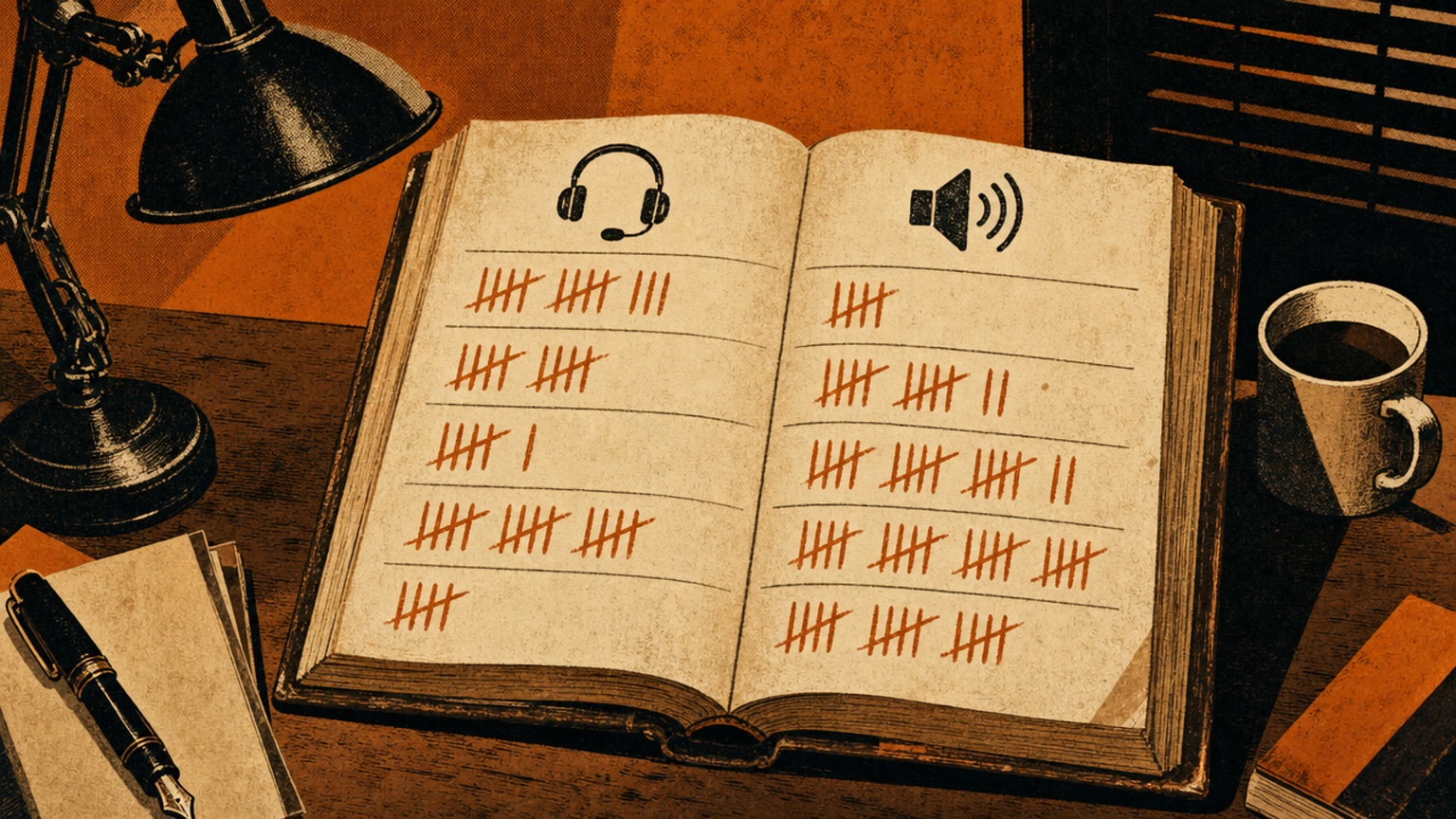
Here is the comparison I walk through with owners. It is my operational read from building and testing these systems, not a vendor benchmark. Individual services vary a lot on both sides.
| Factor | Human answering service | AI voice agent |
|---|---|---|
| Pickup speed | Depends on queue depth and staffing. Storm nights and Monday mornings are when it slips. | First ring, every call, including ten at once. |
| Consistency of intake | Varies by operator and shift. A new hire may skip a question. | Asks the same questions in the same order every time, because it was built to. |
| Judgment on unusual calls | Strong. A person can tell something is off and improvise. | Only as good as the escalation rules. Odd calls should route to a human. |
| Empathy with distressed callers | Strong, when the operator is good. | Can be polite and calm, but it is not a person, and some callers will notice and mind. |
| Writing into your systems | Often a message emailed or texted to you, then retyped by your staff. | Can book directly into the calendar and write the record into the CRM or field service software. |
| Industry knowledge | Generalists unless you pay for a specialty service. Your script carries the knowledge. | Whatever you put in its instructions and knowledge base, which you can edit any day. |
| Audit trail | Message logs, sometimes recordings. | Full transcripts and structured data on every call, if the build keeps them. |
| Cost model | Usually per minute or per call, with tiers and overage. More volume, more bill. | Varies widely: subscription, usage, or a build you own. Volume spikes cost far less. |
If you want the market rates on the human side, I broke those down in how much an answering service costs. The short version is that per-minute and per-call billing is fine at low volume and painful when your phone gets busy, which is exactly when you need it most.
Read down that table and a pattern shows up. The AI column wins the rows that are about structure: speed, consistency, data. The human column wins the rows that are about situations: the unusual, the emotional, the call nobody wrote a rule for. Which rows matter most depends on your industry, so let's go one at a time.
What Does an HVAC Shop Need From the Phone at 2am?
An HVAC call after hours is a triage problem first and a conversation second. The caller has no heat in January or no cooling in July, and the business needs to know three things fast: is this a real emergency, where is it, and is it worth waking a tech for.
HVAC owners have been outsourcing this for a long time, and the reasons they give are worth listening to. In a 2015 ACHR News feature on contractors who use answering services, one New Jersey owner said people in a time of need want a human being to talk it through, and credited his service with keeping the phones covered for weeks after Hurricane Sandy took his lines down. A Pennsylvania owner put it more plainly: he did not want to be taking calls himself all night. His on-call techs were required to call emergency customers back within 15 minutes.
Both points still hold. A person in a cold house wants reassurance, and an owner wants to sleep. What has changed is what "covered" can mean. Here is how the two options compare on a typical HVAC overnight:
- Triage. A human operator follows a decision tree you wrote and makes judgment calls at the edges. An AI agent follows the same tree, every time, and can ask the safety questions (any smell of gas, any carbon monoxide alarm, anyone elderly or medically vulnerable in the house) without skipping one at 3am. Gas or CO should always route straight to "leave the house and call 911 or the gas company," regardless of who answers.
- Dispatch. Both can page the on-call tech. The difference is what arrives: a message to call someone back, or a structured job with address, equipment, symptoms, and urgency already filled in.
- Booking the non-emergencies. Most overnight calls are not true emergencies. A human service usually takes a message for the morning. An AI agent can put the visit on tomorrow's schedule while the caller is still on the line, which matters because the homeowner who gets a time slot stops calling around.
- Storm surges. The first cold snap of the year is when an answering service's queue gets long and when an AI agent's advantage is largest, because it does not have a queue.
Where the human still wins in HVAC: the caller who is frightened, elderly, or confused, and the long, rambling call that is really a complaint about last week's repair. Those are the calls I build to transfer. The detailed HVAC flow, including the no-heat and no-cool triage rules, is on the HVAC after hours answering service page, and I compared the AI side of the market in the best AI receptionist for HVAC companies. Restoration contractors have the same shape with higher stakes (water does not wait), which is why restoration gets its own page.
What Does a Law Firm Need From the First Call?
For a law firm, the first call is intake, and intake is the business. The problem is well documented. In Clio's 2024 secret shopper study, a research firm posing as prospective clients contacted 500 US law firms. As IAALS summarized it, only 40% of firms answered the phone, down from 56% in 2019, and 48% neither answered nor called back. Callers who actually reached a person by phone were more than three times as likely to recommend the firm as the average across channels, and nearly eight times as likely as callers who only got a voicemail follow-up.
So the first lesson is simple: almost anything beats voicemail. The harder question is what kind of answer the caller should get.
A law firm intake call has requirements a plumbing call does not:
- Conflict check data. Names of the caller and the opposing party, captured accurately, before anyone discusses the matter.
- Matter type and urgency. A DUI arrest tonight, a custody emergency, and a will update next month are three different queues.
- No legal advice. Whoever answers, human or AI, cannot tell the caller what their case is worth or what to do. The intake gathers facts and books the consult.
- Confidentiality. What the caller says is sensitive from the first sentence.
Lawyers also have a specific ethics frame. ABA Formal Opinion 512, issued in July 2024, covers lawyers' use of generative AI tools. It ties AI use back to existing duties: competence, protecting client information under Rule 1.6, communication, and supervising the people and tools that work for the firm under Rules 5.1 and 5.3. That last one is worth noticing, because a human answering service is also nonlawyer assistance the firm is responsible for. Neither option gets you out of supervising. The questions just change: for a human service, who are these operators and how are they trained; for an AI system, where do the transcripts live, who can read them, and does the vendor train models on them. ABA opinions are guidance, not binding rules, and your state bar may have its own, so check with your own ethics counsel.
Where AI wins for law firms: consistency. Every caller gets the same conflict questions and the same matter-type screening, at lunch, at 9pm, and on Sunday, and the intake lands in your practice management system as a record rather than a pink slip. Where the human wins: the caller who is crying, the caller in an active domestic violence situation, the caller who needs a person to hear them before they can answer a single structured question. A well-built AI intake routes those to a person immediately. If it cannot, a human service is the safer choice for that practice area. The full intake flow is on the after hours answering service for lawyers page.
What Does a Med Spa Need Between Treatments?
A med spa's phone problem is mostly not after hours. It is during hours, when the front desk is also checkout, retail, consent forms, rebooking, and the person walking the next client back. According to the American Med Spa Association's 2024 industry report, 81% of med spas are single-location businesses, and a single-location practice averages about eight employees. Eight people covering providers, front desk, and management means the phone is somebody's fourth job at any given moment.
The calls themselves are a mix: new clients price-shopping a treatment, existing clients rebooking (the same report puts repeat patients at 73%), and post-treatment questions. That last category is where the med spa answer diverges from HVAC and legal.
- Booking and rebooking. This is the AI agent's home turf. It can check the provider calendar, offer real slots, and confirm, in the middle of a busy Saturday, without putting anyone on hold.
- Treatment questions. General questions (how long does a session take, what is the downtime typically like) can be answered from approved content. Anything about a specific person's reaction, swelling, pain, or symptoms is a clinical question and goes to a nurse or the medical director's on-call path. Not the AI, and not an answering service operator either.
- Privacy. Whether a given med spa is a HIPAA covered entity depends on how it operates, including whether it conducts certain electronic transactions; HHS has the official definitions. If it is, any vendor that creates, receives, or keeps health information on its behalf, human or AI, is a business associate and needs a business associate agreement. Even where HIPAA does not technically apply, state privacy rules usually do, so I build as if it applies.
Where the human wins for med spas: the unhappy client. A client upset about a result wants to be heard by a person, and a script, human or AI, makes it worse. Those calls should go to the manager or the provider, not to any outsourced layer. For the clinical and privacy architecture, see the HIPAA compliant answering service and medical after hours answering service pages. The same booking-first pattern runs at dental offices, covered on the dental answering service page.
What Do Callers Actually Think About Talking to AI?
Here is the honest part that vendors tend to skip. Plenty of people do not want to talk to AI.
A Gartner survey of 5,728 customers, run in late 2023 and published in July 2024, found that 64% would prefer companies not use AI for customer service, and 53% would consider switching to a competitor if they found out a company was going to. The top concern was not that AI would be rude or wrong. It was that AI would make it harder to reach a person.
The legal data says the same thing from a different angle. In the Clio study summarized above, three out of five prospective clients said they would only use a chatbot if they could switch to a human when needed, even though about half agreed a chatbot can be a helpful starting point.
I take two things from that. First, the fear is about being trapped. An AI agent that says up front that it is an automated assistant, and transfers to a person the moment someone asks, addresses the concern the survey actually measured. One that hides what it is, or loops people through menus, confirms it. Second, the comparison that matters for a small business is not "AI vs a person who answers right away." It is usually "AI vs voicemail" or "AI vs a queue." Against voicemail, almost every caller prefers something that answers and books.
I always build disclosure into the first sentence. It is honest, several states are moving toward requiring it, and it costs nothing. I covered the disclosure rules in more depth in can AI agents make outbound calls.
What Do Operators Say About It on Reddit?
Vendor pages, this one included, have a reason to sound sure of themselves. Owners, staff, and customers trading notes in industry subreddits do not, so it is worth reading what they say. Across law firms, med spas, and HVAC shops, the same four themes keep coming up, and they line up with the survey data above.
- The hang-up risk is real at first touch. In an r/LawFirm thread asking whether AI is ready to replace the people answering the phones, attorneys said prospective clients expect a person on the first call and some will hang up and dial a competitor. A few also raised malpractice exposure if an agent strays into anything that sounds like advice. Homeowners in an r/hvacadvice thread on AI call-taking said much the same: once they realize it is AI, they call the next company. Med spa owners in r/MedSpaGrowth worried about how clients would feel finding out the front desk was a bot.
- After hours and overflow is where it earns its keep. The same skeptics mostly agree on this part. One attorney in the r/LawFirm thread runs AI only after hours and said it picks up a few new cases a month that would have gone to voicemail; another suggested offering it as an opt-in alternative to voicemail rather than the front door. In r/MedSpa, the argument was that the value is the share of calls already going to voicemail, not replacing the desk. Med spa owners in r/MedSpaGrowth said clients care more about a fast answer and easy booking than whether a human picked up, especially at night. HVAC commenters liked it for nights and weekends as long as it books the visit instead of trying to diagnose over the phone.
- It is only as good as the system it books into. In r/hvacpeople, an owner said the agents that work have real calendar integration, fast responses, and emergency triage, and that most of what is sold is a glorified voicemail that never touches the CRM, which leaves callers feeling brushed off. One shop there credited an AI receptionist with a big jump in bookings. In an r/HVAC thread on ServiceTitan's AI dispatching, commenters said it can work with a clean customer database, then asked how many shops actually have one, and noted that older customers without email or a cell phone fall through a flow that assumes a text confirmation.
- Bad answers cost more than missed calls, so keep a person close. In an r/LawFirm thread comparing an AI phone assistant to an answering service, one lawyer who switched from a live service said it went smoother than expected, sorting calls and sending summaries and intake notes, while others still swore by live intake and pointed to misheard words and the emotional or urgent calls a bot should not handle. A med spa owner in r/MedSpa described an AI that told a batch of leads the clinic was in the wrong state, and those people do not come back. In r/MedSpaHub, the setup that worked best was a hybrid: AI on missed-call texts and follow-up with tight, short scripts and no treatment advice, and people on the voice calls that carry the anxiety and the big-ticket decisions.
None of that is an argument against AI on the phone. All of it is an argument for the hybrid: let the agent cover after hours and overflow, connect it to a calendar and CRM someone keeps clean, keep its scripts narrow, and keep a person one transfer away for the caller who does not want a machine and the job that does not fit the rules.
When Is a Human Answering Service the Better Choice?
Being straight about this, because it is the part that decides whether you trust the rest. A human answering service is the better fit when:
- Most of your calls are emotional or unpredictable. Crisis lines, family law with frequent emergencies, funeral services, anything where the caller's state of mind matters more than the data you collect.
- Your call volume is low and steady. If you get a handful of after-hours calls a week and none of them need booking, a simple human message service is easy to set up and there is little for automation to improve.
- Your callers skew strongly against automation. If you know your clients are older or have told you they hate automated phone systems, listen to them.
- You have no systems for the AI to write into. An AI agent's biggest advantage is booking and writing records directly. If your schedule lives on paper, much of that advantage is gone until you fix the schedule.
- Nobody will own the rules. An AI agent needs someone to update its instructions when services, hours, or prices change. If no one at the business will do that and you are not paying someone to, a human service degrades more gracefully.
None of these are permanent. But if two or three describe your business today, start with a good human service and revisit in a year.
Is a Hybrid the Real Answer?
For most of the shops I talk to, yes. The question is not which one, it is where the handoff sits. Three patterns cover most cases:
- AI first, human on exceptions. The agent answers everything, handles booking, FAQs, and routine triage, and warm-transfers the emotional, unusual, or high-stakes call to your on-call person. This is the pattern I build most often, and it is the one the Gartner advice points to: make the path to a person obvious and fast.
- Human by day, AI after hours. Your own front desk handles business hours, and the AI agent covers nights, weekends, lunch, and overflow when every line is busy. Good for practices whose clients value a familiar voice during the day.
- AI answers, human service behind it. Some businesses keep a human answering service as the escalation layer for calls the agent should not handle, instead of waking the owner. More moving parts, but it can make sense for 24/7 operations with a lot of sensitive calls.
Whichever pattern you pick, add a text-back for anyone who hangs up before the call connects. A missed call that gets a text inside a minute often turns into a conversation; I wrote that layer up in missed-call text-back. And write down what the AI is not allowed to do. That list (no legal advice, no clinical advice, no quoting outside approved prices, transfer on request) matters more than any feature list.
What Should You Ask Before You Pick Either?
The same questions work for both options. Ask them of any human service or AI vendor, including me.
- What happens on the call nobody planned for? Ask for the exact escalation path, and test it yourself at 11pm.
- Where does the information end up? In your calendar and CRM, or in an email someone has to retype?
- Who can read the recordings and transcripts, and for how long? For law firms and medical practices, this is not optional. Get the business associate agreement or confidentiality terms in writing.
- What does a busy day cost? Per-minute and per-call billing look fine until the first heat wave.
- How do you change the script? Same day, by you? Or a support ticket and a week?
- What happens if you cancel? Do your call history, intake data, and setup leave with you, or stay with the vendor?
- Does the caller know who they are talking to, and can they reach a person? If the answer to either is no, keep looking.
That cancellation question is the one I care about most, and it applies to us too; how we answer it is at the end of this note. If you want a deeper look at whether AI is worth it at all for your shop, start with is an AI receptionist worth it.
Which Page Fits Your Shop?
This note is the overview. Each industry has its own page with the specific triage rules, intake fields, and handoffs I build for it:
- Any small business, after hours: after-hours answering service
- Any small business, around the clock: 24/7 answering service
- HVAC: HVAC after hours answering service
- Restoration (water, fire, mold, storm): after hours answering service for restoration companies
- Property management: after-hours answering service for property management
- Law firms: after hours answering service for lawyers
- Medical practices and clinics: medical after hours answering service
- HIPAA-sensitive practices, med spas included: HIPAA compliant answering service
- Dental: dental answering service
- Car dealerships: automotive answering service
- Comparing the established human services: after hours answering service companies
Or browse the whole services hub. Whatever you pick, the goal is the same: the person who chose your business and dialed it should not hit a voicemail and move on to the next name on the list.
What Does the Hybrid Look Like When Someone Else Runs It?
Everything above assumes someone on your side writes the rules, tests the escalation path at 11pm, and reads the transcripts when a call goes sideways. For an HVAC owner on a roof, a solo attorney in court, or a med spa running three treatment rooms, that someone usually does not exist. That is the gap we work in: we run it for you.
We set up a hosted CRM with the AI already wired in, connect it to the calendar, CRM, or field-service software you already use, and manage it for your shop. It is live in about two weeks (a little longer when compliance work such as HIPAA or carrier text registration is involved), and it runs at one flat monthly price in the same range as the do-it-yourself AI plans. For med spas and medical practices, the managed setup can run HIPAA-compliant with a signed business associate agreement, encrypted in transit and at rest. In practice it is the hybrid from this note: the AI answers first, books what it can, and hands the emergency, the distressed caller, or the new matter to your person with the details already written down. The four services most shops start with:
- Voice AI receptionist. Answers day or night, triages with your rules, books onto your calendar, and transfers to a person on request or when the call needs one. The after-hours answering service page shows the full flow.
- Speed to lead. A missed call, form fill, or ad lead gets a text back right away, while the caller is still deciding who to call next. More on why the first few minutes decide the job.
- Database reactivation. The past customers, old consult requests, and lapsed clients already in your system get a conversational text campaign that books the ones who are ready now: the tune-up, the follow-up consult, the next treatment.
- AI social replies. Facebook and Instagram comments and DMs get answered and routed instead of sitting unread until Monday.
The cancellation question from the checklist applies to us too. Your contacts, your call and conversation history, and your phone number are yours to export or port out if you leave.
For shops that want the whole system on hardware they own, prompts, logs, and models included, we also do custom builds. That is a bigger project, about 30 days from kickoff to live with the hardware, integrations, and compliance setup. Most shops start managed and grow into a rig.
Sources
- IAALS (2Civility): Phone Calls Ignored, Emails Unanswered, on the 2024 Clio Legal Trends Report secret shopper study
- Gartner: Survey Finds 64% of Customers Would Prefer That Companies Didn't Use AI for Customer Service (July 2024)
- ABA Formal Opinion 512: Generative Artificial Intelligence Tools (July 2024)
- American Med Spa Association: 2024 Medical Spa State of the Industry Executive Report Recap
- HHS: Covered Entities and Business Associates
- HHS: Business Associates guidance
- Reddit r/LawFirm: AI Phone Assistant vs. Answering Service
- Reddit r/LawFirm: Is AI truly ready to replace human beings answering the phones at your law practice?
- Reddit r/MedSpaGrowth: AI voice assistants for med spa front desks
- Reddit r/MedSpa: AI receptionists, what are everyone's thoughts?
- Reddit r/MedSpaHub: Answering service vs AI answering
- Reddit r/hvacadvice: What are your thoughts on using AI for taking calls and dispatching?
- Reddit r/HVAC: Service Titan with AI dispatching
- Reddit r/hvacpeople: HVAC shop owners, has anyone tried AI for answering calls?
- ACHR News: Call Answering Services Still Relevant (2015)
This note is written by an operator who builds these systems, not by an attorney or a compliance officer, and it is not legal or medical advice. Confirm ethics and privacy obligations for your own practice with counsel.
FAQ
What Is the Difference Between an AI Voice Agent and an Answering Service?
An answering service uses human operators in a call center who answer your forwarded calls from a script and pass messages along. An AI voice agent is software that answers the call itself, follows rules you set, and can book appointments and write records directly into your calendar or CRM. Humans bring judgment and empathy; AI brings speed, consistency, and structured data.
Is an AI Voice Agent Better Than an Answering Service?
For routine, high-volume calls such as booking, rebooking, FAQs, and standard triage, an AI voice agent usually answers faster and captures cleaner data. For emotional, unusual, or high-stakes calls, a trained human is still better. Most small businesses do best with a hybrid where AI answers first and transfers exceptions to a person.
Can an AI Voice Agent Handle Law Firm Intake?
It can collect conflict-check names, matter type, urgency, and contact details consistently and book a consultation, but it must not give legal advice. ABA Formal Opinion 512 ties AI use to existing duties of competence, confidentiality, and supervision, the same supervision duty that applies to a human answering service. Distressed or emergency callers should be routed to a person.
Do Med Spas Need a HIPAA Compliant Answering Service?
If the med spa is a HIPAA covered entity, any vendor that creates, receives, or keeps health information for it, whether a human answering service or an AI system, is a business associate and needs a business associate agreement. Whether a particular med spa is a covered entity depends on how it operates, and state privacy laws often apply either way, so treating call data as protected is the safer default.
Do Customers Mind Talking to an AI on the Phone?
Many do. A 2024 Gartner survey found 64% of customers would prefer companies not use AI for customer service, and the top worry was that it would make reaching a person harder. Disclosing the AI up front and transferring to a human on request addresses that concern, and for a small business the realistic alternative is often voicemail, not a live person.
When Should a Business Choose a Human Answering Service Instead of AI?
When most calls are emotional or unpredictable, when volume is low and needs no booking, when callers strongly dislike automation, when there are no digital systems for an AI to write into, or when nobody will maintain the AI's rules. In those cases a good human service is simpler and degrades more gracefully.
What Does Pulp AI Studio Offer Instead of an Answering Service?
We set up and run a hosted CRM with the AI built in for you: a voice AI receptionist that answers first and transfers exceptions to a person, speed-to-lead text back, database reactivation, and AI social replies. It connects to the calendar and CRM you already use, goes live in about two weeks, and runs at one flat monthly price in the same range as do-it-yourself AI receptionist plans, with the setup and ongoing management done for you. Your contacts, history, and phone number can be exported or ported out if you leave. Shops that want the system on hardware they own can step up to a custom build, which takes about 30 days. Most shops start managed and grow into a rig.