
 Adam Pichardo
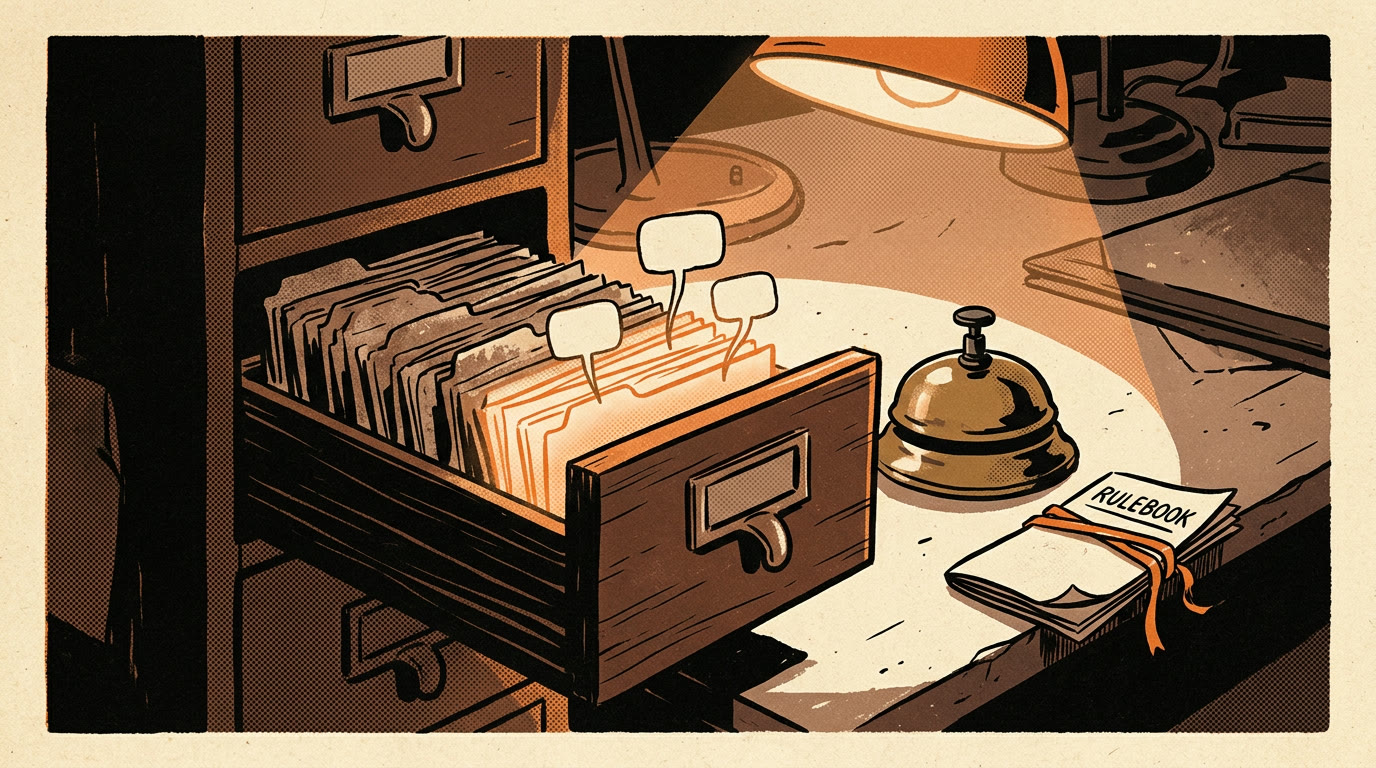
Every business that has spent money on marketing has a drawer like this. Old web leads who never booked. Estimates that went quiet. Customers who bought once, three years ago, and have not heard from you since. The ad money that brought them in is already spent. Database reactivation is the practice of going back to that list and asking, politely, whether anyone is ready now.
It is also the part of my work that makes owners the most nervous, for a fair reason. A question I saw on Reddit, nearly word for word: "Isn't database reactivation against TCPA…" The person asking had been pitched by three agencies in a week and not one had brought up the law. So this note does both halves. First, what database reactivation is and how a campaign actually runs. Then the legal part, with links to the actual rules, so you can judge your own list.
I set these campaigns up for a living, so weigh my bias. I am not a lawyer, and nothing here is legal advice. Where the rules changed recently, I say when and link the source.
Key Takeaways
The short version, before the detail.
| Point | Details |
|---|---|
| What it is | A text (and sometimes email) campaign to old leads and past customers already in your CRM, with replies handled in real time and ready buyers booked onto a calendar. |
| Who it suits | Businesses that spend on marketing and have a list: dealers, contractors, med spas, real estate agents, mortgage brokers, dental and medical practices. |
| It is not illegal by itself | The TCPA does not ban texting your own contacts. It sets rules on consent, timing, and opt-outs. A campaign that follows them is a normal marketing program. |
| Consent is the whole game | Marketing texts sent with automated systems generally need prior express written consent. Old leads often have weak or missing consent records, which is where the risk sits. |
| Opt-outs got stricter | Since April 11, 2025, consumers can revoke consent by any reasonable means, and you have up to 10 business days to honor it. The FCC narrowed the pending "revoke all" piece on September 30, 2026. |
| States add their own rules | Florida and Oklahoma limit sales texts to 8 a.m. to 8 p.m. and three per 24 hours on the same subject, among other requirements. |
What Is Database Reactivation?
Database reactivation is re-engaging the contacts already in your system, people who once asked about your service or bought from you, with a short outbound campaign that invites them to reply. It runs mostly by SMS, because that is where people actually answer, with email as a backup channel.
The modern version differs from a blast in one way that matters: somebody answers. When a past customer replies "how much for a tune-up this month?" or "we sold that car, but my daughter needs one," an AI assistant replies within seconds, answers from approved information, asks the qualifying question, and offers real times on your calendar. When a reply needs a person (a complaint, a big-ticket question, someone ready to sign today), it goes to your staff with the conversation attached.
It is not cold outreach: a purchased or scraped list is a different activity with a much worse legal profile. And it is not a newsletter. The goal is a two-way conversation that ends in a booking.
Who Is Database Reactivation For?
It fits businesses that have paid to generate leads for a while and have a few hundred or more contacts that went cold. A few patterns I see most:
- Car dealers. Old internet leads, unsold showroom traffic, and service customers whose vehicles are now at trade-in age.
- Contractors. HVAC, roofing, plumbing, and remodeling estimates that never closed, plus past customers due for maintenance.
- Med spas. Clients who came in once and never rebooked, and consult requests that stalled on price.
- Real estate agents. Buyer and seller leads from past years whose plans may have changed.
- Mortgage brokers. Past applicants and closed clients when rates or their situation change.
It is a poor fit when the list is mostly purchased, when you cannot show how most of the contacts got there, or when nobody can work the hot replies the same day. A reactivation campaign that wakes up twenty interested people and then leaves them waiting until next week is worse than not sending. If your inbound response time is still slow, fix that first; I wrote up why in speed to lead.
How Does a Database Reactivation Campaign Run?

The send is the easy part. Most of the work happens before it and in the first 48 hours after.
- Pull the list and find the consent trail. Export every contact with its source (web form, walk-in, phone, purchase), its date, and whatever consent language the person agreed to. Contacts with no record of how they got there get set aside. This step decides what you can send, so it comes first.
- Clean it. Remove duplicates, landlines, numbers that already opted out, and anyone on your internal do-not-contact list. Scrub against the National Do Not Call Registry for anything marketing-shaped, and check old numbers against the Reassigned Numbers Database (more on both below).
- Segment by age and source. A lead from last month, a past customer from two years ago, and an estimate from four years ago are three different conversations. Smaller segments also let you send in waves, so a bad first message costs you one segment, not the whole list.
- Give them a reason to reply. The best messages are short, plainly from you, and about something real: a maintenance season, a rebooking opening, a trade-in check, a rate change worth a conversation. Name the business in the first line, keep it to a sentence or two, and tell people how to stop.
- Answer every reply, fast. This is where the AI earns its place. It replies in seconds, answers from your approved information, asks one qualifying question at a time, and offers real slots. It does not invent prices, promise outcomes, or argue with anyone.
- Hand the hot ones to a human. Set clear rules for what goes to a person: anyone ready to buy now, any complaint, any question outside the script. The person gets the full thread so they do not ask the customer to repeat themselves.
- Book it, then confirm it. A reply is not a result. The result is an appointment on the calendar with a reminder, and ideally a show.
- Process opt-outs and wrong numbers immediately. STOP, "wrong number," "who is this, stop texting me": all of these get handled the same day, logged, and never texted again.
The same two-way setup handles new inbound leads too. A missed call that gets a text back within a minute is the inbound cousin of reactivation, covered in missed-call text-back.
What Results Should You Expect?
Agency pages love a big headline number. I am not going to give you one, because I have not seen a public, independent study of database reactivation results that I would put my name next to, and the honest answer is that it depends on things only your list can tell you.
What moves the outcome is mostly the list itself: how old it is (five-year-old leads mostly do not remember you, and many of their numbers belong to someone else now), how people got on it (your own form beats a third-party vendor), whether the reason to reply is real ("just checking in" gets ignored), and how fast replies get answered.
And what the first day really looks like: some bookings, a lot of "not right now," some opt-outs, some wrong numbers, and a few annoyed replies. That mix is normal. Track the numbers that pay the bills (appointments booked, appointments kept, jobs or sales closed) rather than reply rate. If the opt-out or complaint count is high, stop and fix the message or the segment before the next wave.
Isn't Database Reactivation Against TCPA?
No, not by itself. The Telephone Consumer Protection Act does not ban texting your own leads and customers. It sets rules about consent, timing, and opt-outs, and the FCC treats text messages as calls for most of those rules. A campaign that follows them is a normal marketing program. A campaign that ignores them is how small businesses end up in class actions, because the TCPA carries statutory damages of $500 per violation, up to $1,500 if willful, and every text counts separately. Here are the pieces that matter for a reactivation campaign. (For the same rules applied to AI phone calls, see can AI agents make outbound calls.)
Do marketing texts need written consent?
Under the FCC's rules, a marketing text sent with an autodialer needs prior express written consent. The regulation at 47 CFR 64.1200(f)(9) defines it as a written agreement, signed by the person (electronic signatures count), that clearly authorizes the seller to send them marketing messages at a specific number, with a clear disclosure that they are agreeing to it and that consent is not a condition of purchase.
Some vendors argue this does not apply to their platform, because the Supreme Court narrowed the definition of "autodialer" in Facebook v. Duguid in 2021. Do not build a campaign on that. The do-not-call rules apply to marketing texts regardless of equipment, several states define automated systems more broadly, and carriers require documented opt-in anyway. Plan on written consent.
The do-not-call rules also have an "established business relationship" exception: 18 months after a purchase, three months after an inquiry, per 64.1200(f)(5). It helps with the National Do Not Call Registry, but it does not replace written consent for automated marketing texts, and most of an old list is outside it.
What are the quiet hours?
Federal rules bar telephone solicitations before 8 a.m. or after 9 p.m. in the recipient's local time, under 64.1200(c)(1). Some states are tighter. Schedule by the contact's time zone (area code is a rough guide, not proof), and keep sends inside the narrowest window that applies to your list.
How do opt-outs work now?
- Any reasonable means. The FCC's 2024 consent revocation order (FCC 24-24) took effect April 11, 2025. Consumers can revoke consent by any reasonable method. Replies like "stop," "quit," "end," "revoke," "opt out," "cancel," or "unsubscribe" count automatically, and so does any other reply a reasonable person would read as "stop texting me." You must honor it within a reasonable time, no more than 10 business days. You may send one confirmation text with no marketing in it; within five minutes, it is presumed fine.
- "Revoke all" was delayed, then narrowed. One part of that order would have made an opt-out from any one type of message apply to every robocall and robotext from that sender. The FCC delayed it to April 11, 2026, then again to January 31, 2027 (DA 26-12). On September 30, 2026, the full Commission voted to replace it. Under the new Report and Order (FCC 26-67), an opt-out from an informational message can be limited to that category, but an opt-out from a marketing message still covers all future marketing messages from you.
- Designated opt-out methods. The same order lets a sender designate an exclusive opt-out method, such as replying with one of the standard words, if the method is clearly disclosed in each message. A sender who designates nothing still has to honor opt-outs made by any reasonable means. These amendments take effect 30 days after Federal Register publication, which had not happened as of October 14, 2026, and the FCC opened a further comment round on shortening the 10-day window and other changes.
For a reactivation campaign the practical rule is simpler than the history: treat any reply that means "stop" as a stop, process it the same day, and never text that number again for marketing. The first send to an old list is where opt-outs pile up, so this has to be automatic before you press go.
What happened to the one-to-one consent rule?
The FCC adopted a rule in 2023 requiring that consent be given to one seller at a time, which would have ended consent forms that list dozens of "marketing partners." It never took effect. On January 24, 2025, the Eleventh Circuit vacated it in Insurance Marketing Coalition v. FCC, holding the FCC went beyond what the statute allows. I could not find a replacement rule as of October 2026.
For reactivation that matters less than it sounds, because your own leads consented to you. Where it still bites: bought leads from a form that named you as one partner among many. I leave those out of a reactivation send.
Also worth knowing: in McLaughlin Chiropractic v. McKesson (June 2025), the Supreme Court held that district courts in TCPA cases are not bound by the FCC's interpretations of the statute. Outcomes are harder to predict in both directions, so run a program that does not depend on a favorable reading.
What about state mini-TCPA laws?
Several states have their own telephone solicitation laws, often called mini-TCPAs, with their own private lawsuits. Two that come up constantly:
- Florida. The Florida Telephone Solicitation Act (section 501.059) requires prior express written consent for sales texts sent with an automated system. A 2023 amendment (HB 761) added a rule that a person must first reply STOP, after which the sender has 15 days to stop, before suing over text solicitations. A separate section, 501.616(6), limits commercial solicitation calls to 8 a.m. to 8 p.m. and to no more than three in 24 hours on the same subject.
- Oklahoma. The Telephone Solicitation Act of 2022 (HB 3168) follows the same pattern: written consent for automated sales calls and texts, an 8 a.m. to 8 p.m. window, and a three-per-24-hours cap on the same subject.
Other states have passed or proposed similar laws, and they change often, so check the states on your list. A safe default: 8 a.m. to 8 p.m. local time, and no more than one marketing text per contact per day.
Do you need 10DLC registration?
Yes, if you are texting from a regular 10-digit business number. 10DLC registration is a carrier requirement, not a law: your messaging provider registers your brand and each campaign through The Campaign Registry, and the carriers filter unregistered business traffic heavily. Registration asks how contacts opted in and what your messages will say, so a reactivation campaign with a weak consent story can get rejected or filtered before the law ever comes into it. The CTIA Messaging Principles and Best Practices are what the carriers point to. Whether a short code or 10DLC fits your volume is its own question, answered in short code vs 10DLC.
Why Are Old Lead Lists the Risky Part?
A fresh list is manageable. Old lists are where the problems collect.
- Stale or missing consent. A form from 2019 may not have had compliant consent language, or the record of who agreed to what may be gone. If you cannot show the consent, treat it as missing.
- Reassigned numbers. Phone numbers get disconnected and handed to new people all the time. The new owner of that number never consented to anything, and texting them is a texting-without-consent problem even though you did nothing wrong on purpose.
- Consent that was never yours. Leads bought from a vendor, shared by a partner, or inherited from a previous owner may have consented to someone else.
The tool for the reassigned-number problem is the FCC's Reassigned Numbers Database. You query a number with the date you got consent, and it tells you whether that number has been permanently disconnected since. Under 64.1200(m), a sender who checked the database and got a "no" has a safe harbor if the number turns out to have been reassigned anyway. For an old list, that check is close to mandatory.
The cleanest approach I know for an aging list is to split it. Contacts with a clear written-consent record go into the reactivation campaign. Contacts without one either get an invitation to opt in through a channel you are allowed to use, such as email or a mailed card, or get left alone. That is a smaller first send, and a far safer one.
What Should You Check Before the First Text?
The checklist I walk through before any reactivation send:
- Can we show how and when each contact consented, and does the language cover marketing texts from this business?
- Have we removed opt-outs, landlines, and duplicates, scrubbed the National Do Not Call Registry, and checked old numbers against the Reassigned Numbers Database?
- Is the 10DLC brand and campaign approved for this use?
- Does the first message name the business and say how to opt out, and is it scheduled inside the narrowest local-time window that applies?
- Are STOP and plain-English "stop texting me" replies processed automatically and logged?
- Is a person ready for the hot replies the same day, and will we pause the next wave if opt-outs spike?
If any answer is no, fix that line before the send, not after the first complaint.
A Plan Run for You, Not Another Tool to Run
Database reactivation is how most shops start with us, and it runs on results: you pay per sale or booked appointment from the list, agreed before the first text, and nothing if the list does not produce. Quiet hours, opt-out handling, and carrier registration are built into the setup instead of left to you. After the campaign, it can keep running on the managed plan. Most owners did not lose the lead because a tool was missing. They lost it because nobody had time to run the tool. So we run it for you: a hosted CRM with the AI already wired in, set up and managed for your shop, live in about two weeks, and priced in the same range as the do-it-yourself AI receptionist plans, at one flat monthly price. The pieces most shops start with:
- Voice AI receptionist. Answers, qualifies, and books onto your calendar day or night, connected to the CRM or field software you already use, and hands the call to a person when it needs one. See the after-hours answering service.
- Speed to lead. A new form fill, ad lead, or missed call gets a text back right away, while the customer is still shopping. More on why the first few minutes decide the job.
- Database reactivation. The old leads and past customers already sitting in your system get a conversational text campaign that books the ones who are ready now. Related: why leads go quiet and how to restart them.
- AI social replies. Facebook and Instagram comments and DMs get answered and routed instead of sitting unread until Monday. The AI chatbot guide covers how those replies work.
Your contacts, your conversation history, and your phone number stay yours to export or port out if you leave. For shops that want the whole system on hardware they own, prompts, logs, and models included, we also do custom builds (about 30 days, since there is hardware to set up). Most shops start managed and grow into a rig, not the other way around.
If you want us to run one on your list, here is how our database reactivation service works. To see the whole managed setup end to end, the Sprint page walks through it.
Sources
- eCFR: 47 CFR 64.1200, Delivery restrictions (consent, quiet hours, revocation, established business relationship, reassigned numbers safe harbor)
- FCC 24-24: Report and Order on consent revocation (February 2024)
- FCC DA 26-12: Order extending the "revoke all" effective date to January 31, 2027 (January 2026)
- FCC news release: FCC Votes to Give Consumers More Choice in the Calls They Receive (September 30, 2026)
- FCC 26-67: Report and Order and Further Notice of Proposed Rulemaking on consent revocation (released October 1, 2026)
- Eleventh Circuit: Insurance Marketing Coalition v. FCC, No. 24-10277 (January 24, 2025)
- U.S. Supreme Court: McLaughlin Chiropractic Associates v. McKesson Corp. (June 20, 2025)
- U.S. Supreme Court: Facebook, Inc. v. Duguid (April 1, 2021)
- Florida Statutes 501.059: Telephone solicitation
- Florida Statutes 501.616: Unlawful acts and practices (calling hours and frequency)
- Florida Senate: HB 761 (2023), Telephone Solicitation
- Oklahoma Legislature: HB 3168 enrolled, Telephone Solicitation Act of 2022
- FCC Reassigned Numbers Database
- CTIA: Messaging Principles and Best Practices
This note is written by an operator who sets up these campaigns, not by an attorney, and it is not legal advice. TCPA and state texting rules change often and turn on the facts of your list. Confirm your consent records and your campaign with counsel before you send.
FAQ
What Is Database Reactivation?
Database reactivation is a short outbound campaign, usually by text message, to the old leads and past customers already in your CRM. Replies are answered in real time, often by an AI assistant working from approved information, and people who are ready are booked onto your calendar or handed to a person on your team.
Is Database Reactivation Legal Under the TCPA?
Yes, when it follows the rules. The TCPA does not ban texting your own contacts, but marketing texts sent with automated systems generally need prior express written consent, sends must respect quiet hours, and opt-outs made by any reasonable means must be honored within 10 business days. State laws such as Florida's and Oklahoma's add their own requirements. This is not legal advice.
What Are the TCPA Texting Rules for Marketing Messages?
The core rules are prior express written consent for automated marketing texts, no telephone solicitations before 8 a.m. or after 9 p.m. in the recipient's local time, honoring National Do Not Call Registry and internal do-not-call requests, and honoring opt-outs such as STOP or any other reasonable request within 10 business days. Florida and Oklahoma narrow the window to 8 a.m. to 8 p.m. and cap sales messages at three per 24 hours on the same subject.
Can a Customer Opt Out by Replying Something Other Than STOP?
Yes. Since April 11, 2025, the FCC's rules let consumers revoke consent by any reasonable means, and a reply a reasonable person would read as a request to stop counts. A September 30, 2026 FCC order will let senders designate an exclusive opt-out method if it is clearly disclosed in each message, once it takes effect, but treating any stop-like reply as a stop remains the safe practice.
Is the FCC One-to-One Consent Rule in Effect?
No. The Eleventh Circuit vacated the one-to-one consent rule on January 24, 2025, in Insurance Marketing Coalition v. FCC, before it took effect. Prior express written consent is still required for automated marketing texts, and leads bought from a vendor whose form listed many marketing partners remain the riskiest contacts to text.
Why Are Old Lead Lists Risky to Text?
Old lists tend to have missing or outdated consent records, numbers that have been reassigned to new people who never consented, and relationships outside the do-not-call exception windows of 18 months after a purchase or three months after an inquiry. Checking numbers against the FCC's Reassigned Numbers Database and texting only contacts with a clear consent record reduces that risk.
Does Pulp AI Studio Run Database Reactivation Campaigns?
Yes, on a performance basis. We clean the list, check consent, register the number with the carriers, write the message you approve, and answer every reply with AI, booking the ready ones onto your calendar. You pay per result from the list, a sale or a booked appointment depending on your business, agreed before the first text, and nothing if the list does not produce. Afterward, reactivation can keep running on our managed plan alongside a voice AI receptionist, speed-to-lead text back, and AI social replies, at one flat monthly price. Your contacts, conversation history, and phone number stay exportable if you leave.