
 Adam Pichardo
TL;DR:
- Automated vehicle follow-up uses trigger-based SMS systems that send personalized messages without manual effort, improving engagement.
- Successful implementation requires a CRM or DMS with SMS capability, a trigger workflow engine, and consent management to ensure legal compliance.
Automated vehicle follow-up is defined as a trigger-based SMS system that sends personalized text messages to car buyers at specific points in their journey, without any manual effort from your sales team. When you follow up vehicle interest texts automatically, you replace the slow, inconsistent manual process with a system that responds in seconds, every time. Tools like Jouver and Mogli for Salesforce make this possible by connecting your CRM or dealer management system (DMS) to SMS workflows tied to real lead events. Done right, this approach increases conversion rates, reduces ghosting, and keeps your dealership top of mind before a prospect calls your competitor. Compliance with TCPA, CASL, and GDPR is non-negotiable and must be built into the system from day one. If you want this set up and run for you, see the automotive answering service for dealerships.
What tools do you need to follow up vehicle interest texts automatically?
Before you send a single automated message, your tech stack needs to be in place. Three components are required: a CRM or DMS with SMS capability, a trigger-based workflow engine, and a consent management system. Without all three, you are either sending messages illegally or sending them blind.

Here is what each component does in practice:
| Component | Purpose | Example Tools |
|---|---|---|
| CRM or DMS | Stores lead data and triggers message events | Salesforce, VinSolutions, DealerSocket |
| SMS automation engine | Sends messages based on workflow triggers | Jouver, Mogli, Twilio |
| Consent management | Captures, stores, and retrieves opt-in records | ActiveProspect, LeadConduit |
Your CRM is the brain. It holds the customer’s name, the vehicle they inquired about, their appointment status, and their purchase history. The SMS engine is the arms. It fires messages when the CRM signals a qualifying event, such as a new lead form submission, a booked test drive, or a completed sale. Consent management is the legal backbone. Without it, you are exposed.
- Your contact data must be current. Stale phone numbers cause delivery failures and inflate your bounce rate.
- Every lead record needs a consent flag before any automated message fires.
- Your DMS and CRM must sync in real time so that a sold vehicle does not trigger a follow-up for a buyer who already purchased.
- Platforms like Mogli for Salesforce provide cross-channel orchestration and log every outbound message directly inside Salesforce journeys, giving your sales team full visibility.
Understanding AI-powered dealer engagement platforms can help you choose the right combination of tools before you commit to a setup.
How to implement automated SMS sequences step by step
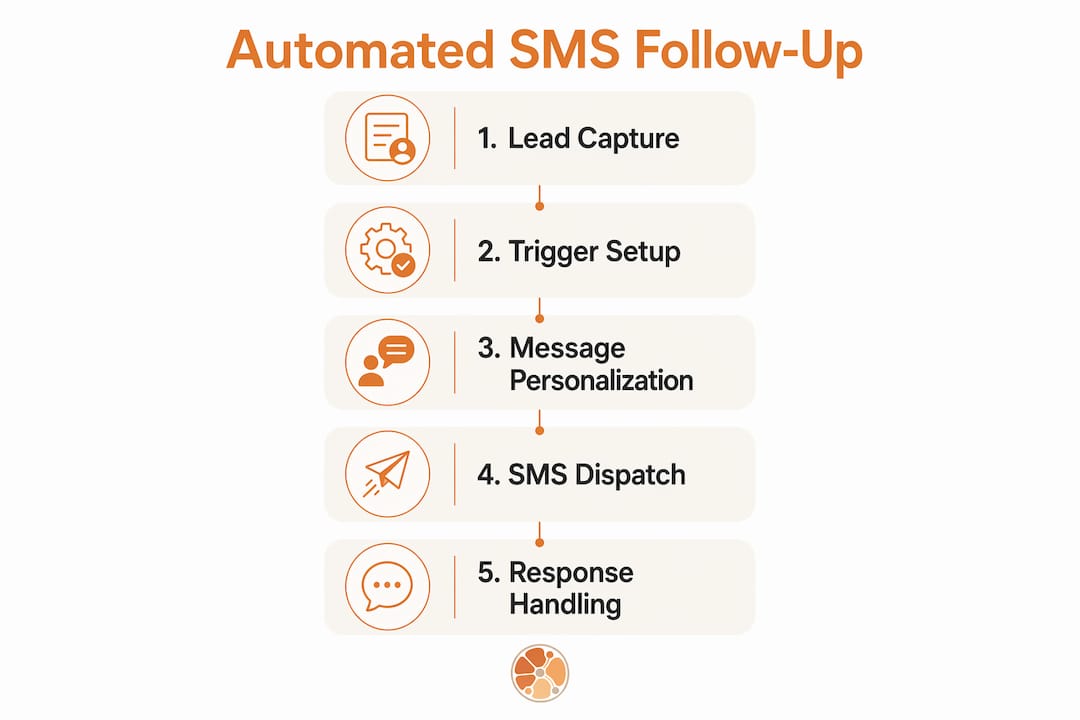
Event-anchored automation achieves higher engagement and conversion rates than generic check-in blasts because each message is tied to something the customer actually did. Here is the execution sequence that works.
-
Map your customer journey events. Identify every moment that warrants a text: lead form submission, appointment booking, test drive reminder, post-drive follow-up, sale confirmation, and review request. Each event becomes a trigger node in your workflow.
-
Write a template for each trigger. Keep messages under 160 characters where possible. Use dynamic tokens for personalization:
{{FirstName}},{{VehicleModel}},{{AppointmentTime}}. A lead capture message might read: “Hi {{FirstName}}, thanks for your interest in the {{VehicleModel}}. I’d love to answer any questions. Reply YES to schedule a test drive.” -
Set your timing rules. Trigger-based workflows send reminders 24 hours and 2 hours before test drives, and review requests 7 days post-sale. These intervals are not arbitrary. They match the natural decision rhythm of a car buyer and reduce no-shows significantly.
-
Integrate your SMS platform into your marketing workflow. Mogli embeds directly into Salesforce Marketing Cloud, allowing dynamic template personalization and full message logging. Jouver connects to your DMS to pull appointment and vehicle data automatically.
-
Test every workflow before going live. Run each trigger with a test contact. Verify that the correct message fires, that tokens populate correctly, and that opt-out replies stop the sequence immediately.
-
Monitor delivery metrics weekly. Track open rates, reply rates, opt-out rates, and delivery failures. A delivery failure rate above 5% signals a data quality problem in your CRM.
Pro Tip: Write your templates in the voice of a specific salesperson, not a generic brand account. Messages that say “Hi Sarah, this is Mike from Riverside Auto” outperform branded blasts because they feel like a real conversation, not a marketing campaign.
Integrating texting fully into CRM workflows not only automates sending but empowers sales staff with coherent message histories for personalization. That visibility is what separates a well-run automation from a system that creates confusion on the floor.
What legal compliance rules apply to automated vehicle texting?
Prior express written consent (PEWC) is legally required in the U.S. under TCPA for every marketing SMS you send. This is not a gray area. Sending automated texts without documented PEWC exposes your dealership to statutory damages of $500 to $1,500 per message. At scale, that math gets catastrophic fast.
Here is what compliant consent looks like in practice:
- The opt-in language must specify the message type (e.g., vehicle follow-up texts), the sender’s identity, the approximate frequency, and the opt-out method. Vague checkboxes are insufficient and will not hold up in court.
- Consent documentation must capture the date, time, method of collection, exact language presented, and the purpose of the messages.
- Opt-out must be immediate. When a customer replies STOP, your platform must halt all automated messages to that number instantly. Failure to process opt-outs immediately escalates legal liability and damages customer trust.
- Assign a consent coordinator inside your organization. Someone must own the process of auditing consent records quarterly.
For Canadian dealerships, CASL applies a different standard. CASL requires express or implied consent, sender identification in every message, and a working unsubscribe mechanism processed within 10 business days. Implied consent under CASL can come from an existing business relationship, but it expires after two years.
“Strict documentation and retrieval of consent records is the cornerstone to defending SMS marketing compliance in the event of audits or lawsuits.” — Dealer1 Solutions
GDPR applies if you have any EU-based customers or prospects. The standard there is explicit, freely given consent with the right to withdraw at any time. If your dealership operates across borders, you need a compliance layer that handles all three frameworks simultaneously. Build this before you scale, not after your first complaint.
How to troubleshoot and optimize your automated follow-up system
The most common failure mode in automated vehicle inquiry follow-up is not a technical one. It is a data problem. Leads get duplicated, opt-outs get missed, and the same customer receives three texts from three different workflows because nobody mapped the overlap.
Pro Tip: Audit your CRM contact records before activating any automation. Deduplicate phone numbers, verify consent flags, and confirm that every active lead has a clearly assigned stage in the sales funnel. A clean database is worth more than any fancy workflow.
Here is a practical troubleshooting checklist:
- Log every interaction. Maintaining conversation history inside your CRM prevents duplicate texting and keeps human follow-up coherent. Sales reps should see the full text thread before picking up the phone.
- Synchronize cross-channel communications. If a customer replies to an email and books an appointment, your SMS workflow must recognize that and suppress the “have you booked yet?” follow-up.
- Monitor reply handling. Automated sequences that cannot process inbound replies create dead-end conversations. Configure your platform to route replies to a live rep or an AI responder.
- Refine message cadence based on behavior. If leads are opting out after the third message, your sequence is too aggressive. Pull the analytics and adjust the timing or reduce the number of touches.
- Audit consent records every 90 days. Records go stale. Staff turn over. Forms get updated. A quarterly audit catches gaps before they become legal exposure.
- Update templates when inventory changes. A follow-up referencing a model you no longer stock destroys credibility instantly. Tie your templates to live inventory feeds where possible.
Automated text reply systems that are properly integrated with CRM data give your sales team a genuine operational advantage. The goal is not to replace human conversation. It is to make sure every lead gets a response before they lose interest.
Key takeaways
Automated vehicle follow-up texts work when trigger-based SMS workflows are integrated with accurate CRM data, compliant consent records, and event-anchored timing rules.
| Point | Details |
|---|---|
| Use event-based triggers | Tie every message to a real customer action like a lead form, appointment, or sale. |
| Build consent management first | Document PEWC with date, time, language, and purpose before sending any automated text. |
| Log all messages in your CRM | Full conversation history prevents duplicate contact and supports human follow-up. |
| Monitor and refine cadence | Review opt-out rates and delivery metrics weekly to adjust timing and message frequency. |
| Assign a compliance owner | One person must audit consent records and opt-out processes every 90 days. |
Why I think most dealerships are automating this backwards
I have seen a lot of dealerships set up SMS automation by starting with the tool and working backwards to the strategy. They buy a platform, load in a generic template pack, and start blasting. Within 30 days, opt-out rates are high, leads are complaining, and the sales manager is blaming the technology.
The technology is not the problem. The sequence is.
The highest-converting automated follow-up systems I have worked with share one trait: every message is tied to something specific the customer did. Not “just checking in.” Not “we have great deals this weekend.” The message says: “Hi James, your test drive for the 2025 Tacoma is confirmed for tomorrow at 10am. Reply C to confirm or call us to reschedule.” That message converts because it is relevant, timely, and personal. It feels like a service, not a sales pitch.
The compliance piece is where I see the most dangerous shortcuts. Dealers assume that because a customer filled out a lead form, they have consent to text. That assumption is wrong under TCPA, and it has cost dealerships real money. Build the consent capture into your lead form at the point of submission, document it properly, and process opt-outs the moment they arrive. It takes one afternoon to set up correctly and it protects you indefinitely.
Automation frees your staff to have better conversations, not fewer conversations. The AI employee handles the first five touches. Your best salesperson handles the close. That division of labor is where the real gains come from. If you are weighing an AI BDC against your current team, our note on how car dealers use conversational AI breaks down the split.
— Adam
A Plan Run for You, Not Another Tool to Run
Most owners did not lose the lead because a tool was missing. They lost it because nobody had time to run the tool. So we run it for you: a hosted CRM with the AI already wired in, set up and managed for your shop, live in about two weeks, and priced in the same range as the do-it-yourself AI receptionist plans, at one flat monthly price. The pieces most shops start with:
- Voice AI receptionist. Answers, qualifies, and books onto your calendar day or night, connected to the CRM or field software you already use, and hands the call to a person when it needs one. See the after-hours answering service.
- Speed to lead. A new form fill, ad lead, or missed call gets a text back right away, while the customer is still shopping. More on why the first few minutes decide the job.
- Database reactivation. The old leads and past customers already sitting in your system get a conversational text campaign that books the ones who are ready now. Related: why leads go quiet and how to restart them.
- AI social replies. Facebook and Instagram comments and DMs get answered and routed instead of sitting unread until Monday. The AI chatbot guide covers how those replies work.
Your contacts, your conversation history, and your phone number stay yours to export or port out if you leave. For shops that want the whole system on hardware they own, prompts, logs, and models included, the custom build below is the step up (about 30 days, since there is hardware to set up). Most shops start managed and grow into a rig, not the other way around.
How Pulp AI Studio can set up your vehicle lead follow-up system
If you want to follow up vehicle interest texts automatically without spending months configuring a CRM from scratch, Pulp AI Studio sets up the system and runs it for you. The missed call text-back and AI auto-reply service goes live in about two weeks on the managed setup, at one flat monthly price, and dealers who want it on hardware they own can step up to a custom build in about 30 days. Every missed call from a vehicle prospect triggers an immediate, personalized text response, even at 11pm on a Sunday. The system integrates with your existing dealership setup, captures consent at the point of contact, and logs every interaction so your sales team walks into every conversation fully informed. The point is to reduce ghosting and close more leads before competitors get the call.
FAQ
What is automated vehicle follow-up texting?
Automated vehicle follow-up texting is a trigger-based SMS system that sends personalized messages to car buyers at specific points in their journey, such as after a lead form submission or before a test drive, without manual effort from your sales team.
How soon should the first follow-up text go out after a lead inquiry?
The first message should fire within five minutes of a lead form submission. Response speed is the single biggest factor in whether a prospect engages or moves on to another dealership.
Do I need written consent before texting vehicle leads?
Yes. TCPA requires prior express written consent for all marketing SMS in the U.S., with documentation that includes the opt-in date, time, language, and message purpose. Implied consent from a lead form is not sufficient.
What platforms support automated SMS for car dealerships?
Jouver and Mogli for Salesforce are purpose-built for dealership SMS automation. Both support dynamic personalization tokens, CRM-integrated message logging, and trigger-based workflows tied to lead and appointment events.
How do I handle opt-outs in an automated texting system?
Opt-out requests must be processed immediately by your SMS platform. Failure to stop messages after a STOP reply increases legal liability under TCPA and damages the customer relationship permanently.